So, you're trying to pick the best Bluetooth Thermal Sensor for 2026? Well, it's not just about comparing price tags or whatever range the specs claim. What really matters is accuracy, battery life, how good the app is, signal stability, and the conditions where you actually install it. I mean, a sensor that works great in a quiet home might struggle inside a packed fridge or a metal cabinet.
So, this guide looks at real-world options from brands like SensorPush, Ruuvi, Govee, and Inkbird. We'll cover things such as temperature accuracy, humidity readings, Bluetooth range, data logging, alerts, and how reliable they are over the long run. For testing, it's worth trying cold storage, room-temperature monitoring, and taking repeated readings next to a trusted reference thermometer. And honestly? Those small differences really do matter.
It’s pretty easy to forget about calibration—and battery replacement, honestly. And then there are those apps that look really slick on the surface, but the export options are kind of limited. For researchers, facility managers, or anyone keeping an eye on medication storage, that can get annoying fast. So we’re going to sort out the real, verified specs from the marketing fluff and point you toward good picks for homes, labs, greenhouses, vehicles, and food storage.
Honestly? No single model is going to win every situation. That's just the honest truth. Bluetooth signals can fade or weaken through walls, metal, and dense materials. And phone compatibility? It might change after a software update. Even strong sensors can give misleading readings when they're placed near vents, in sunlight, or around warm equipment. So this comparison values consistency that can actually be measured—and it's upfront about its limitations. So, in the end, these recommendations are meant to help you pick with confidence. Just keep in mind that how things actually perform out in the field can bring out weaknesses that product pages hardly ever talk about.
In 2026, the best Bluetooth thermal sensors combine accurate readings, stable wireless communication, and practical battery life. A Bluetooth thermal sensor detects infrared energy and converts it into temperature data. Unlike ordinary contact thermometers, it can measure surfaces without touching them. A Bluetooth Thermal Imager adds a visual heat map, helping users locate hotspots, cold areas, and uneven temperature patterns. It turns an invisible condition into something easier to inspect. That distinction matters.
These sensors support equipment checks, building inspections, food storage monitoring, and laboratory observations. Core functions may include live temperature readings, adjustable emissivity, data logging, alarm limits, and mobile reporting. During field testing, stable Bluetooth connections are important near metal cabinets or crowded workspaces. Calibration also deserves attention, because reflective surfaces can produce misleading results. Water, polished steel, and glass may confuse an inexperienced user. No device is perfect. I still review unusual readings with a second method before making a maintenance decision.
Tips: Check the measuring range and accuracy before purchase. Choose a sensor with clear calibration guidance and secure data storage. Test its connection through walls and around machinery. Keep the sensing area clean. Record the surface type beside every reading. A small note can prevent a large mistake. Reliable results depend on both the instrument and the person using it.
Bluetooth thermal sensors convert temperature into an electrical signal before sending it wirelessly. It starts with heat. A thermistor changes resistance as temperature changes. An RTD uses a more predictable resistance shift. Some systems use thermocouples for wider temperature ranges.
A small circuit reads this signal through an analog-to-digital converter. Firmware then applies calibration data and checks for unusual readings. The sensor may record 21.6°C, battery status, and measurement time. Bluetooth Low Energy sends these values in short radio packets. A nearby phone, gateway, or monitoring system receives them. Transmission can happen every few seconds or after a measured change.
Distance, metal walls, and crowded radio environments can reduce reliability. A sensor inside a cold storage room may report accurately but transmit slowly. Battery-saving settings often increase the delay. That trade-off matters in medical storage, laboratories, kitchens, and equipment rooms. Calibration against a trusted reference improves confidence, but calibration is not permanent. Probes can drift after shock, moisture exposure, or repeated heating cycles. I would also question readings taken beside vents or warm motors. Placement errors are easy to miss. A high-quality sensor should show its accuracy range, operating limits, calibration method, and data interval clearly. “Real-time” may only mean frequent updates. Test it where it will actually operate.
When comparing 2026 Bluetooth Thermal Sensors, begin with measurement quality, not app design. A reliable Thermal Sensor should list accuracy, resolution, response time, and calibration conditions. Accuracy near ±0.3°C can suit equipment monitoring, but surface readings may change with distance, airflow, and material finish. Resolution matters too. A 0.1°C display does not guarantee 0.1°C accuracy.
Bluetooth range is another practical specification. Indoor walls can reduce a claimed 30-meter range to less than 15 meters. Check whether the sensor stores readings when the connection drops. Battery life should be tested with the chosen sampling interval, because one-minute readings consume more power than hourly checks. Also review the operating temperature, ingress protection rating, mounting method, and data export options. These details affect daily reliability more than polished dashboards.
Tips: Compare results against a traceable reference thermometer before installation. Test the sensor on a matte surface and a reflective surface. Record the room temperature, distance, and sampling rate. Security deserves attention as well; choose encrypted Bluetooth communication and regular firmware support. I would not trust a single laboratory figure. Real buildings are messy, and even careful tests can miss condensation, vibration, or weak signals. That uncertainty should remain visible in the comparison.
What Are the 2026 Best Bluetooth Thermal Sensors?
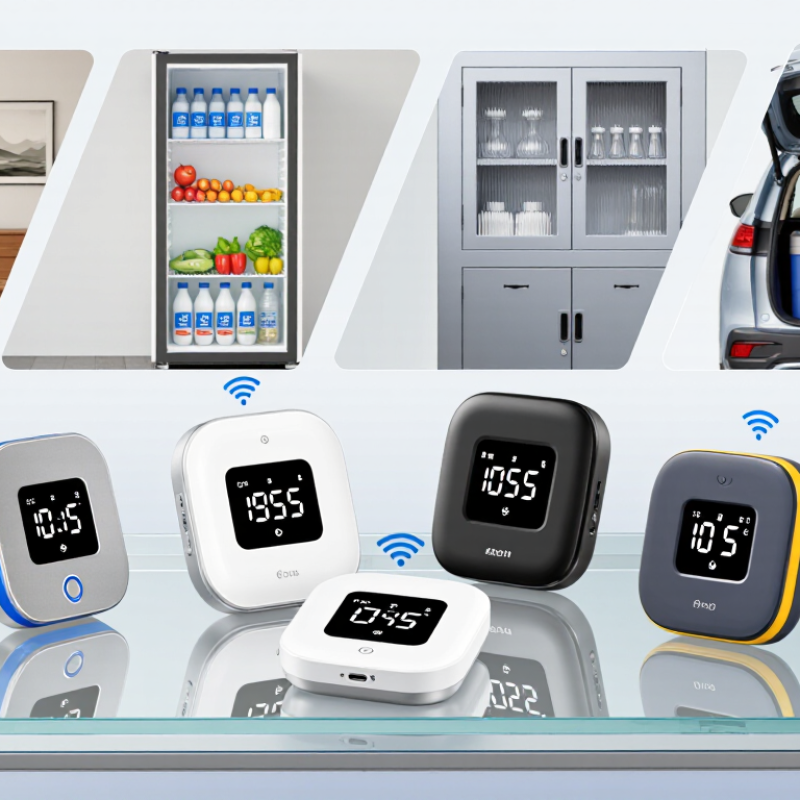
The best Bluetooth thermal sensor depends on the monitoring environment, not only its accuracy. Contact temperature probes suit pipes, motors, and refrigerated shelves. Infrared sensors measure surfaces without touching them. Air-temperature sensors work better inside rooms, cabinets, and storage boxes. A Thermal Sensor Module can combine temperature, humidity, and battery monitoring in one compact unit.
Form factor changes practical performance. Coin-sized beacons are easy to mount, but their small batteries may struggle in cold rooms. Probe-based devices provide clearer readings on metal surfaces. Wearable or flexible sensors fit equipment with limited space. Bluetooth SIG’s 2024 Market Update reported 5.4 billion Bluetooth device shipments in 2023, with annual shipments projected to reach 7 billion by 2028. This growth supports broader sensor deployment, but connectivity is not the same as measurement quality.
Tips: Match the sensor to the surface, airflow, and installation distance. Test readings beside a calibrated reference during normal operation. The missed detail is condensation. It can distort results and shorten battery life. For warehouses, choose long-range communication and replaceable power. For laboratories, prioritize calibration records and stable sampling. For machinery, vibration resistance matters more than a thin enclosure. I would not select a sensor from a specification sheet alone. Real walls, steel frames, and crowded wireless spaces can expose weaknesses. Temperature alarms should also include delay settings, because one brief door opening should not trigger unnecessary action.
Sensor selection depends on the sensing element, physical form factor, and monitoring environment. The chart compares representative temperature ranges of widely used sensor types; the ranges describe the sensing element, while the final Bluetooth device range depends on the probe, enclosure, electronics, and installation method.
Form factors and suitable environments: Probe sensors suit liquids, pipes, HVAC ducts, and equipment interiors. Surface or adhesive sensors are useful for equipment housings, batteries, and flat panels. Clamp-mounted sensors work well on pipes and cables without permanent installation. Fixed transmitters are suitable for warehouses, cold rooms, laboratories, and industrial monitoring points. Thermocouples cover the widest high-temperature range, RTDs provide stable and accurate measurement, thermistors are economical for moderate temperatures, and infrared sensors enable non-contact monitoring where surface emissivity and line of sight are controlled.
Choosing the best Bluetooth thermal sensor for 2026 requires more than comparing advertised temperature ranges. Bluetooth SIG’s 2024 Market Update reports 5.4 billion Bluetooth devices shipped in 2023, with annual shipments projected to reach 7 billion by 2028. This growth supports wider sensor availability, but connectivity quality still depends on walls, metal cabinets, and antenna placement. In a workshop, a 20-meter indoor connection may become unreliable behind machinery. Test the sensor where it will actually operate.
Battery life also needs careful inspection. A compact Uncooled Thermal Sensor may run for weeks when sending occasional readings, yet continuous streaming can drain a small battery within days. Look for published operating hours, transmission intervals, and sleep-mode behavior. Rechargeable cells are convenient, but cold environments can reduce practical capacity. The specification sheet rarely shows this clearly.
Accuracy depends on calibration, emissivity settings, and the surface being measured. NIST Technical Note 1297 emphasizes documenting measurement uncertainty, rather than reporting accuracy as a single impressive number. A sensor claiming ±0.5°C may perform differently on painted metal, skin, or glossy plastic. Use a calibrated reference during evaluation. Bluetooth Low Energy improves power efficiency, while newer protocol features can strengthen reliability and device management. Still, compatibility should be tested with the intended phone, gateway, and software. I would not trust laboratory figures alone. Real rooms are messier.
In 2026, Bluetooth thermal sensors will serve more than simple temperature logging. Bluetooth SIG’s 2024 Market Update projects annual Bluetooth device shipments will reach seven billion by 2028. That scale supports wider use in connected facilities, logistics, and equipment monitoring. Small sensors can transmit readings to phones, gateways, or local control systems. Installation becomes faster, especially where new cabling is costly. Still, wireless convenience is not accuracy.
Building management is a leading application. The International Energy Agency reports that buildings use about 30% of global final energy. Thermal sensors can identify overheated rooms, uneven heating, and inefficient cooling zones. Facility teams can compare readings near windows, vents, and occupied desks. This creates more practical HVAC adjustments. However, one poorly placed sensor can distort the entire picture. Placement deserves more attention.
Cold-chain monitoring is another strong use case. Sensors can track temperature changes inside transport containers, storage rooms, and medical refrigerators. The World Health Organization states that many vaccines require controlled temperature ranges throughout distribution. Bluetooth logging helps staff review exposure events quickly. Industrial maintenance also benefits from surface-temperature checks on motors, bearings, and electrical cabinets. Abnormal heat may indicate friction or overload before failure. Yet battery life, metal interference, calibration drift, and gateway coverage remain real limitations. Some deployments still need wired instruments or independent verification. That is inconvenient, but technically honest.
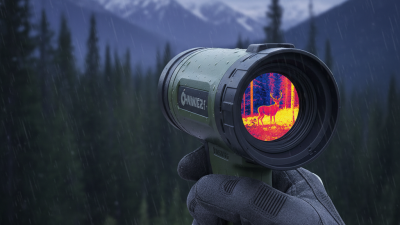
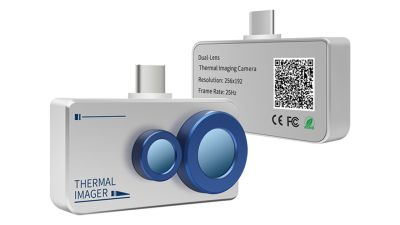
Thermal imaging is becoming an increasingly practical tool for maintenance and inspection. According to the MarketsandMarkets *Thermal Imaging Market* report, the global market is projected to grow from approximately USD 4.1 billion in 2023 to USD 6.5 billion by 2028, driven by demand for predictive maintenance, building inspection, and electrical safety. The H2F6B mobile thermal imager supports this trend with 256×192 infrared resolution, helping users identify abnormal heat patterns during reliable field inspections.
Designed for fast, convenient operation, the compact device connects directly to an Android phone through USB and works with a dedicated application. Its 640×480 visible-light camera provides useful visual context alongside infrared images, while low power consumption helps preserve phone battery life. A one-click high-temperature search makes it easier to locate potential hotspots in equipment, walls, wiring, or mechanical components without carrying a large standalone instrument.
The H2F6B also supports offline image analysis, including point, line, and rectangular-area measurements, allowing users to review thermal conditions after data capture. These functions are valuable for home repairs, outdoor searches, facility checks, and routine equipment maintenance. With portable construction and dual-spectrum imaging, it offers an efficient way for technicians, inspectors, and DIY users to perform quick thermal assessments in changing field conditions.
A thermistor, RTD, or thermocouple detects heat and changes an electrical signal. A small converter digitizes it. Firmware applies calibration data before transmission.
The sensor sends short radio packets to a nearby phone, gateway, or monitoring system. Packets may include temperature, battery status, and measurement time.
It may transmit every few seconds or after a measured temperature change. Battery-saving settings can create longer delays. Real-time may mean frequent, not immediate.
Metal walls, long distances, and crowded radio areas can weaken communication. A sensor may measure correctly but transmit slowly. Cold rooms can make this worse.
Some equipment-monitoring models may reach about ±0.3°C accuracy.
Contact probes suit pipes, motors, and refrigerated shelves. Infrared sensors measure surfaces without touching them. Air sensors fit rooms, cabinets, and storage boxes.
Match the sensor to the surface, airflow, and mounting distance. Avoid vents and warm motors. Test matte and reflective surfaces separately.
Compare it with a traceable reference thermometer before installation and during routine checks. Calibration is not permanent. Shock, moisture, and repeated heating can cause drift.
Check accuracy, resolution, response time, operating limits, protection rating, battery life, and data export. Also review stored readings during connection loss. A polished dashboard proves little.
Condensation can distort readings and shorten battery life. Vibration may affect machinery sensors. One brief door opening should not trigger an alarm. I would still test the device in its real location.
The 2026 best Bluetooth Thermal Sensor models are designed to measure temperature accurately and transmit readings wirelessly to smartphones, gateways, or monitoring systems. Using temperature-sensitive components, these sensors detect changes in heat and send data through Bluetooth connections for real-time observation, alerts, recording, and analysis. Important specifications include measurement range, accuracy, response time, calibration stability, data update frequency, wireless range, battery life, and compatibility with connected devices.
Different sensor types and form factors suit various environments, including homes, laboratories, warehouses, healthcare facilities, food storage areas, industrial equipment, and outdoor monitoring points. When comparing models, users should consider whether they need a compact wearable unit, a probe-based design, or a fixed monitoring device. Reliable connectivity, energy efficiency, durable construction, and secure data transmission are also essential. In 2026, Bluetooth Thermal Sensor technology supports preventive maintenance, cold-chain supervision, environmental tracking, equipment protection, and smarter temperature management across many everyday and professional applications.