Infrared imaging is in high demand around the world right now—not just in industrial inspection, but also automotive safety, medical screening, defense, and smart infrastructure. MarketsandMarkets put the thermal imaging market at roughly USD 6.5 billion in 2023, potentially reaching USD 9.7 billion by 2028. That's about an 8.4% CAGR, give or take. So yes, there's opportunity here. But forecasts vary depending on research methods and what applications you're counting.
When you're picking a reliable Ir Imaging Sensor, the scene matters more than the spec sheet. Short-wave infrared sensors are great for spotting moisture, coatings, and semiconductor defects. Mid-wave and long-wave devices help with gas detection, temperature mapping, and night observation. Buyers should look at spectral response, noise-equivalent temperature difference, frame rate, pixel pitch, lens compatibility, calibration stability, and operating temperature. A sensor can look fantastic on a test bench. Put it on a dusty factory floor, though, and its weaknesses may show up fast.
Yole Group’s infrared and sensing reports keep pointing to progress in microbolometers, cooled detectors, wafer-level packaging, and automotive perception. IDTechEx also sees rising demand for compact thermal systems in autonomous and industrial uses. These reports are helpful, but no single forecast can answer every purchasing question. It's easy to get hung up on resolution. Sometimes stable calibration matters more. This guide looks at the best Ir Imaging Sensor types for global buyers through practical performance, integration cost, supplier capability, and long-term reliability. It also faces an uncomfortable truth: the “best” sensor can change with humidity, distance, target temperature, and local service support. Fancy specs don’t guarantee useful images.
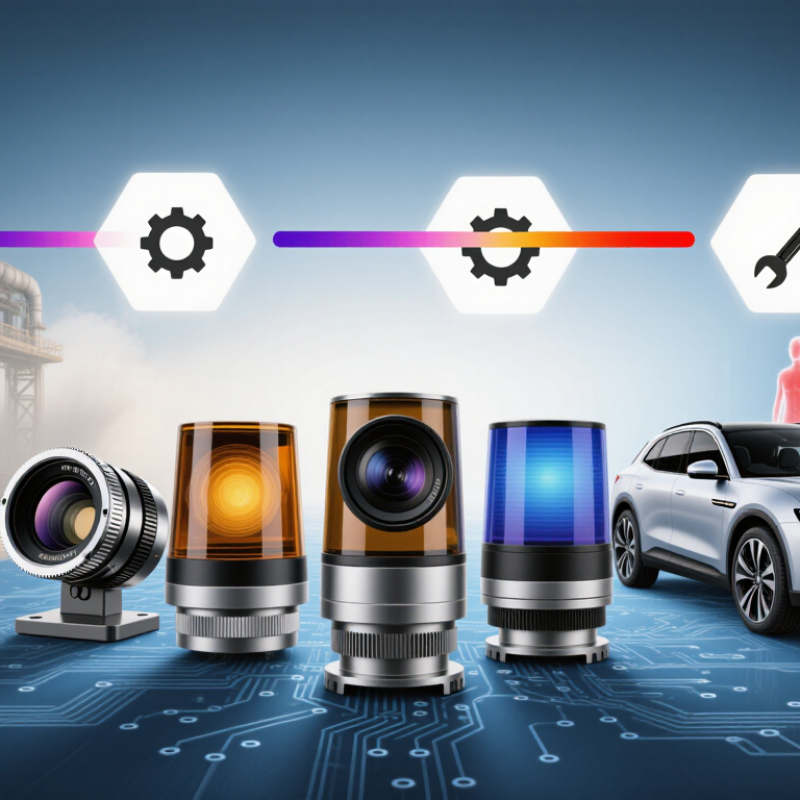
IR imaging sensors detect radiation beyond visible red light, usually across short-wave, mid-wave, or long-wave infrared bands.
Unlike ordinary cameras, they can reveal heat, moisture, and material differences in darkness. The sensor receives infrared photons through an optical lens. A detector then converts that energy into an electrical signal. Signal-processing circuits create the thermal image, often pixel by pixel.
Uncooled microbolometers are common in building inspections, transport, and industrial maintenance. They measure tiny temperature-driven resistance changes and need no cryogenic cooling. Cooled sensors usually deliver better sensitivity and faster response, especially in mid-wave infrared systems.
Short-wave infrared sensors can capture reflected infrared light from silicon, plastics, and moisture. MarketsandMarkets estimates that the infrared imaging market could grow from approximately USD 6.8 billion in 2024 to USD 10.3 billion by 2029. This reflects wider use across security, manufacturing, and environmental monitoring.
Specifications can mislead. A higher resolution does not automatically produce a better image. Lens quality, calibration, thermal drift, and atmospheric absorption also matter. A field test should include hot pipes, cool walls, moving objects, and changing humidity. The Global Industry Analysts report identifies industrial inspection and surveillance as major demand areas, but regional regulations and service skills still affect purchasing decisions. Buyers should compare NETD, spectral range, frame rate, operating temperature, and calibration records. The cheapest sensor may create expensive interpretation errors.
Global buyers can choose among several IR sensor types, depending on temperature range, distance, speed, and budget. Uncooled microbolometers, usually operating in long-wave infrared, suit building inspections, vehicles, security systems, and industrial maintenance. They need no cryogenic cooling, which reduces size and service demands. According to the Yole Group’s 2024 infrared imaging report, uncooled technology remains the largest commercial segment by unit volume.
Cooled photon detectors support higher sensitivity and faster imaging. They commonly use mid-wave or short-wave infrared bands for gas monitoring, scientific measurement, aerospace observation, and high-temperature processes. Cooling improves performance in darkness and through atmospheric interference, but it increases power use, weight, and calibration complexity. The Global Market Insights 2024 report estimates that the thermal imaging market will continue expanding through 2032, driven by industrial monitoring and automotive applications.
SWIR sensors detect wavelengths beyond visible light and can reveal moisture, material differences, and semiconductor defects. A Thermal Imaging Sensor based on this range may deliver clearer results in selected inspection tasks, but it is not automatically better. Buyers should compare noise, pixel pitch, frame rate, lens transmission, operating temperature, and export requirements. The Omdia 2024 machine-vision analysis highlights rising demand for spectral imaging in automated inspection. Still, published market figures differ noticeably between reports. That inconsistency deserves careful review. A small field test often exposes problems that a polished specification sheet misses.
Thermal and short-wave infrared (SWIR) sensors solve different visibility problems. Thermal sensors measure emitted heat, usually across long-wave or mid-wave infrared bands. They can form images in complete darkness without external lighting. Warm machinery, people, and recently heated surfaces appear clearly. However, glass, shiny metal, and low-emissivity coatings can create misleading readings. Smoke may also reduce contrast, especially at longer distances.
SWIR sensors mainly detect reflected infrared light from about 0.9 to 2.5 micrometers. They need daylight or controlled illumination, but they can reveal material differences invisible to standard cameras. Moisture, bruising, plastic layers, and some chemical residues may show stronger contrast. In production lines, SWIR often supports sorting and process inspection. Thermal imaging is usually more practical for overheating equipment and nighttime monitoring. Cooling requirements, lens selection, and local operating temperatures also affect sensor choice. Small details matter.
The boundary is not always clean. A thermal camera may detect a temperature change, but it cannot identify the material causing it. A SWIR camera may identify surface composition, yet miss a hidden heat fault. Engineers should test real samples, not rely only on wavelength charts. Include dust, vibration, reflective surfaces, and seasonal temperature changes in trials. A practical mistake is using one sample image as proof. Performance can shift noticeably after installation. Some systems need more calibration than expected. Budget estimates should include illumination, protective windows, software, and maintenance.
| Evaluation Dimension | MWIR Thermal Sensor | LWIR Thermal Sensor | SWIR Sensor | Buyer-Relevant Guidance |
|---|---|---|---|---|
| Typical spectral range | Approximately 3–5 µm | Approximately 8–14 µm for common long-wave imaging windows | Usually 0.9–1.7 µm; extended-range devices may reach approximately 2.5 µm | Choose the band according to the physical signal, atmospheric conditions and target material. |
| Primary imaging mechanism | Measures emitted thermal radiation, mainly from warm objects | Measures emitted thermal radiation and apparent temperature differences | Primarily measures reflected or transmitted near-infrared light | Thermal sensors are suited to temperature contrast; SWIR is suited to reflected-light and material contrast. |
| Operation in darkness | Excellent; does not require visible illumination | Excellent; does not require visible illumination | Limited without an illumination source, unless enough natural or artificial SWIR light is available | For fully passive night surveillance, thermal imaging is generally the stronger choice. |
| Temperature measurement | Useful for high-temperature targets and industrial processes; measurement accuracy depends on calibration and emissivity | Well suited to non-contact surface-temperature mapping; accuracy depends strongly on emissivity, reflections and atmospheric transmission | Not normally a direct temperature-imaging solution | Select a radiometric thermal camera when calibrated temperature data is required. |
| Typical detector technologies | Cooled photon detectors such as InSb or related MWIR detector materials | Uncooled microbolometers are common; cooled photon detectors are used when higher sensitivity or faster response is needed | Typically InGaAs; extended-range designs use additional detector structures and may have higher dark current | Detector material affects sensitivity, cooling requirements, wavelength coverage and system cost. |
| Cooling requirement | Often cooled for high-performance imaging and low-noise operation | Usually uncooled for general-purpose systems; cooling may be added for demanding applications | Many standard-band systems operate thermoelectrically cooled or near room temperature; extended-range systems may require more thermal management | Uncooled designs usually simplify integration, reduce power consumption and improve portability. |
| Sensitivity metric | Often specified using noise-equivalent temperature difference and detectivity-related parameters | Commonly evaluated by noise-equivalent temperature difference, calibration stability and uniformity | Often evaluated using quantum efficiency, dark current, noise and signal-to-noise ratio | Do not compare sensitivity numbers across technologies unless the test conditions and definitions are identical. |
| Atmospheric performance | Works through selected atmospheric windows; water vapor, carbon dioxide, smoke and humidity can reduce transmission | Common 8–14 µm window supports many outdoor applications, but rain, fog, humidity and distance still affect performance | Can provide useful transmission through some haze and smoke conditions, but performance depends on wavelength, particles and illumination | Validate the complete optical path in the actual climate and working distance. |
| Spatial resolution potential | High resolution is possible, but cooling, optics and detector cost increase system complexity | Available from compact low-resolution modules to high-resolution systems; long-wave optics can be comparatively large | Can offer fine spatial detail because shorter wavelengths support smaller diffraction-limited spot sizes | Resolution depends on pixel pitch, lens focal length, detector format, distance and target size. |
| Material identification | Primarily identifies thermal differences rather than detailed chemical composition | Useful for heat patterns, moisture-related anomalies and thermal leakage, but material signatures are comparatively broad | Strong capability for distinguishing materials, coatings, plastics, minerals, vegetation and moisture-related spectral features | Choose SWIR when reflected spectral information is more important than temperature contrast. |
| Typical applications | Hot-process monitoring, gas detection, high-temperature inspection, research and long-range imaging | Building inspection, electrical maintenance, firefighting, predictive maintenance, security and human detection | Semiconductor inspection, machine vision, sorting, moisture analysis, low-light imaging and material classification | Application requirements should determine the sensor type, not the wavelength label alone. |
| Response to glass and transparent materials | Ordinary glass generally blocks much of the thermal infrared spectrum; measurements through windows require suitable infrared materials | Ordinary glass is generally unsuitable for imaging through; it may reflect or absorb long-wave radiation | Many common glasses transmit substantial SWIR energy, although transmission varies with composition and thickness | SWIR can be advantageous for inspection through selected glass covers or packaging materials. |
| Mechanical and system complexity | Often higher because cooled assemblies, specialized optics and thermal stabilization may be required | Lowest system complexity when using an uncooled microbolometer | Generally moderate; optics and illumination design are important, especially for spectral imaging | For embedded or battery-powered products, compare total system power and integration effort. |
| Relative cost level | Typically high, particularly for cooled and high-performance configurations | Low to high depending on detector resolution, radiometric capability, optics and cooling | Moderate to high; cost rises with larger formats, extended spectral range, cooling and hyperspectral capability | Compare the complete bill of materials, including lenses, illumination, calibration and software. |
| Best choice for 2026 buyers | Best when high sensitivity, high-temperature measurement or long-range performance is essential | Best general-purpose thermal option for reliable temperature contrast at a practical system cost | Best when material recognition, high spatial detail, glass transmission or low-light reflected imaging is required | Use a dual-band system when both thermal behavior and material or reflected-light information are mission-critical. |
Note: Performance varies with detector format, pixel pitch, optical design, calibration method, target emissivity, atmospheric path, illumination and operating temperature. Specifications should be verified under the intended application conditions.
Choosing the right Infrared Imaging Sensor starts with the scene, not the product label. Define the target temperature, distance, and expected movement. A sensor for inspecting electrical cabinets may need a different range than one monitoring outdoor machinery.
Resolution matters, but it is not the only priority. Higher pixel counts reveal smaller defects, while a narrow field of view improves detail at longer distances. Check NETD carefully; lower values usually expose finer temperature differences. A warm cable against a cool panel should appear clearly, not as a blurred shade. Frame rate also matters when objects move quickly. Slow imaging can hide brief overheating.
Look beyond the headline specifications. Confirm spectral range, lens compatibility, calibration stability, and measurement accuracy across the working temperature range. Environmental protection is important for dust, humidity, vibration, and sudden temperature changes. Interface options should match the buyer’s control system and available power supply. Small details matter.
Ask for test data.
In practical evaluations, installation distance often changes image quality more than expected. A technically strong sensor may perform poorly with unsuitable optics or weak calibration. I would also question impressive accuracy claims without testing conditions. Results can shift with reflective metal, airflow, or a dirty protective window. Buyers should request sample images, operating limits, and maintenance guidance before making a global purchase.
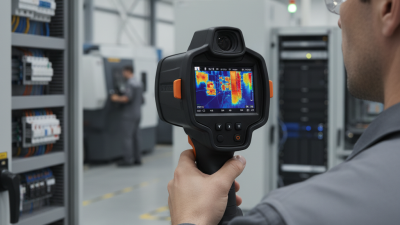
A Thermal Imaging Camera Sensor detects heat rather than visible color. Uncooled microbolometer sensors suit building inspections, electrical maintenance, firefighting, and perimeter monitoring. They start quickly and need little maintenance. A technician can scan a warm circuit breaker without opening the panel.
Cooled sensors provide greater sensitivity and faster response. They fit long-range observation, scientific testing, aerospace research, and high-speed industrial inspection.
MWIR sensors often perform well with hot machinery and flames. LWIR sensors are useful for people, buildings, and stored materials at ordinary temperatures. SWIR sensors serve different needs, including low-light imaging, moisture detection, semiconductor inspection, and material sorting.
The choice depends on temperature range, distance, speed, and atmospheric conditions. A cheaper sensor may fail when small temperature differences matter.
Tips: Define the application before comparing resolution. Check lens options, calibration stability, frame rate, and operating temperature. For outdoor use, test performance in rain, dust, and changing sunlight. A wide field of view helps close inspections, but it reduces detail at distance. One common mistake is selecting a high-resolution sensor for a target that needs better thermal sensitivity. The distinction can blur in real facilities. A practical trial scene, such as a warm pipe beside a cool wall, often reveals more than a specification sheet.
Global buyers should evaluate a Thermal Imaging Sensor Module beyond resolution and price. A sharp image can still hide unstable calibration, weak temperature accuracy, or poor performance in humid environments. Ask suppliers for measured data, not only marketing claims. Useful evidence includes NETD, frame rate, spectral range, temperature accuracy, and operating temperature limits.
Request sample images from dark rooms, reflective metal, moving machinery, and outdoor scenes. Compare them under identical conditions. Check whether the module maintains detail after continuous operation. Review calibration intervals and testing procedures. A supplier with documented quality controls is easier to trust. Still, published specifications may not reflect every installation. Field testing remains necessary.
Cost evaluation should include integration time, software access, replacement parts, shipping, and technical support. A cheaper module may require extra optics or repeated calibration. That cost appears later. Ask how quickly engineers respond, whether remote diagnosis is available, and how firmware updates are managed. Keep written records of response times and sample failures. This process is not perfect. Some buyers focus too heavily on initial price. I have seen that decision create delays during final assembly. A practical supplier should explain limitations clearly, provide traceable test reports, and support realistic acceptance criteria. Short promises are not enough.
They detect infrared radiation beyond visible red light. They can reveal heat, moisture, and material differences in darkness.
An optical lens receives infrared photons. A detector converts energy into electrical signals. Processing circuits build the image pixel by pixel.
Uncooled microbolometers measure resistance changes caused by temperature. They need no cryogenic cooling. Cooled sensors usually provide higher sensitivity and faster response.
Short-wave sensors detect reflected infrared light. They can help inspect silicon, plastics, and moisture. Surface conditions still affect results.
No. Lens quality, calibration, thermal drift, and atmospheric absorption also matter. A sharp image can still contain inaccurate temperature information.
Compare NETD, spectral range, frame rate, temperature accuracy, and operating temperature limits. Review calibration records as well. Numbers alone are not enough.
Test hot pipes, cool walls, moving machinery, and changing humidity. Include dark rooms, reflective metal, and outdoor scenes. Compare samples under identical conditions.
Include integration time, software access, replacement parts, shipping, and technical support. Extra optics or repeated calibration may increase the final cost. Cheap can become expensive.
Ask for measured data, traceable test reports, and documented quality procedures. Check engineering response times, remote diagnosis, and firmware update practices. Keep records of failures and promised support. Perfect decisions are unlikely.
An Ir Imaging Sensor detects infrared radiation and converts it into useful image data, allowing users to see heat patterns, material differences, or details beyond visible light. For global buyers, available options include thermal sensors for long-wave and mid-wave heat imaging, near-infrared sensors for low-light and reflective targets, and SWIR sensors for moisture, material, and process inspection. Each type offers different strengths in sensitivity, spectral response, resolution, speed, and operating conditions.
When selecting an infrared imaging solution, buyers should compare temperature range, pixel resolution, frame rate, spectral band, calibration stability, lens compatibility, environmental protection, and system integration. Thermal sensors are suitable for monitoring, safety, and predictive maintenance, while SWIR and near-infrared systems support industrial inspection, agriculture, sorting, and quality control. A reliable purchasing decision should also consider total cost, sample testing, warranty terms, technical documentation, customization capability, delivery reliability, and responsive after-sales support.