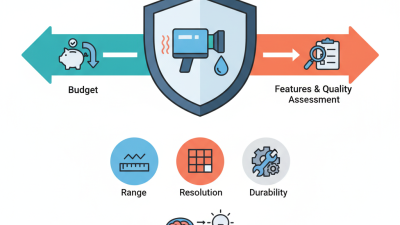
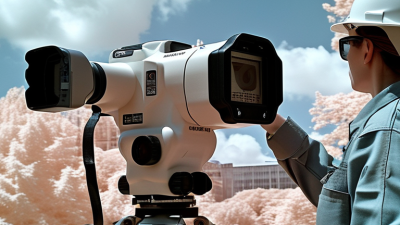
Picking the best Battery Thermal Camera supplier in China isn't just about comparing prices, resolution, or delivery promises. You really need to find someone who understands batteries—stuff like chemistry, thermal runaway risks, inspection workflows, and the limits of infrared tech. The right camera should be able to pick up tiny temperature differences across cells, busbars, connectors, and cooling channels. It’s also crucial that it offers stable calibration, adjustable emissivity, user-friendly software, and helpful reporting tools—especially since these details actually matter when you’re working on a busy production floor.
Dr. Gregory Offer, a well-respected battery researcher over at Imperial College London, hits the nail on the head when he says, “Battery safety begins with understanding heat, not just measuring it.” That should really be a guiding principle when you're evaluating suppliers. Sure, a camera might show a bright hotspot, but if someone isn’t experienced, they might mistake a reflection for an actual fault—that’s a common mistake and worth being aware of. Good suppliers will support you with training, test procedures, sample imaging, and expert advice. They shouldn’t just send you a product brochure and call it a day.
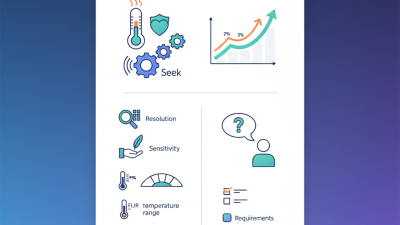
When you're checking out partners like Guide Sensmart, HIKMICRO, or InfiRay, don’t just fall for the fancy claims—look for solid proof. Dive into details like detector resolution, thermal sensitivity, focus quality, temperature range, calibration records, and whether their software plays nicely with yours. It’s also smart to ask for examples of how their cameras have been used in real applications—stuff like battery manufacturing, energy storage, electric cars, or labs. Don’t forget to review their warranty terms, response times, and see if they can do a live demo with similar batteries to yours.
Honestly, the most reliable supplier isn’t usually the cheapest. It’s the one that’s upfront about what they can and can’t do, honestly documents their performance, and genuinely improves based on your feedback. China has tons of capable manufacturers, but the quality can vary quite a bit. So, a little research and careful verification are absolutely crucial—that’s just part of the process.

Battery Thermal Cameras: Definition and Core Functions
Battery Thermal Cameras: Definition and Core Functions
A battery thermal camera is an infrared imaging device that displays surface temperature patterns without physical contact. It converts invisible infrared energy into a visible heat map. Battery-Powered Thermal models support inspections in warehouses, workshops, and mobile maintenance areas.
The camera helps technicians locate overheated cells, loose connections, damaged busbars, and uneven module temperatures. A small bright spot near a terminal can indicate resistance heating before visible smoke appears. The International Energy Agency reported nearly 14 million electric car sales worldwide in 2023. That growth increases the need for repeatable battery monitoring. Thermal cameras do not see internal defects directly, however. Their readings depend on emissivity, viewing angle, distance, and airflow.
Core functions include spot temperature measurement, adjustable alarms, image recording, and temperature trend comparison. Some systems detect thermal differences below one degree Celsius, but accuracy varies by model and test conditions. The U.S. Department of Energy’s Energy Storage Grand Challenge identifies thermal management and safety monitoring as important priorities for battery systems. In practical inspections, operators should scan identical packs under similar load conditions. A cold battery may hide a developing problem. That is an uncomfortable limitation. Thermal imaging supports judgment; it does not replace electrical testing, physical inspection, or controlled diagnostic procedures.
Why Thermal Imaging Matters in Battery Inspection
Choosing a capable battery thermal camera supplier starts with understanding what thermal imaging can actually reveal. Thermal imaging shows heat patterns that ordinary visual checks cannot detect. During battery inspection, a normal-looking surface may hide a loose connection, damaged cell, or uneven current flow. Heat leaves clues. A thermal camera scans modules without physical contact. Inspectors can compare temperatures across neighboring cells under controlled operating conditions. However, one warm spot does not prove failure. Airflow, ambient temperature, load, and camera angle can affect the image.
Experienced technicians combine thermal images with voltage, resistance, and charging data. They record the exact location, surface temperature, operating state, and inspection time. This creates useful evidence rather than a colorful picture. Emissivity settings also matter on reflective metal housings. A careless setting can make a safe surface appear dangerous. Small errors matter. Calibration checks, reference points, and traceable records improve reliability. When evaluating a supplier, buyers should ask about temperature accuracy, image focus, software records, training, and technical support. A lower price may seem attractive, but unreliable measurements can create costly confusion.
Thermal imaging is powerful, but it is not a complete diagnostic method. It may miss internal heating when the casing remains cool. It can also encourage false certainty when operators interpret colors without defined limits. It is imperfect. Teams should set alarm thresholds for each battery design and verify unusual results with approved electrical tests. Reviewing unclear images may feel slower, yet it prevents rushed decisions and strengthens inspection quality.
Key Features of a Reliable Battery Thermal Camera Supplier
China Best Battery Thermal Camera Supplier?
Key Features of a Reliable Battery Thermal Camera Supplier
Choosing a battery thermal camera supplier requires more than comparing image resolution. In field inspections, technicians need stable readings, clear thermal contrast, and dependable operation. A reliable supplier provides cameras with accurate temperature ranges, adjustable emissivity, and fast image refresh rates. Clear data matters. The device should also identify small hotspots around terminals, busbars, and battery enclosures.
Practical support separates a supplier from a simple equipment seller. Look for calibration records, traceable testing procedures, and detailed user training. Suppliers serving a LiFePO4 Battery Pack Manufacturer should understand cell imbalance, loose connections, and abnormal heat patterns. They should explain measurement limits instead of promising perfect results. A strong technical team can help configure alarms, export inspection reports, and interpret images without exaggeration.
Durability deserves close attention.
A camera may face dust, vibration, temperature changes, and frequent handling. Rugged housing, replaceable batteries, secure software, and local repair support reduce downtime. Warranty terms should be clear and realistic. One overlooked detail is data storage security, especially when inspection records support maintenance decisions. No supplier is perfect. We should still question unclear specifications, inconsistent sample images, and vague delivery promises before purchasing.
Leading Battery Thermal Camera Technologies in China
China Best Battery Thermal Camera Supplier?
Leading Battery Thermal Camera Technologies in China
China’s battery thermal camera industry now supports safer cell testing and production inspection. In factory audits, engineers often scan cells during charging, formation, and aging. Infrared cameras reveal uneven heat, loose connections, and early thermal hotspots. These details matter. A visible surface may still hide internal stress. Modern systems combine high-resolution infrared sensors with precise temperature calibration. Some models also provide real-time alarms and automated data recording. This helps teams compare thermal patterns across thousands of cells. However, camera accuracy depends on emissivity settings, distance, airflow, and surface condition. No camera is perfect.
Tips: Ask for calibration records and sample thermal images before purchasing. Confirm the camera’s temperature range, resolution, response time, and software compatibility. A reliable Custom Lithium Battery Pack Supplier should understand both battery construction and thermal measurement limits. Request testing on your actual cell shape and pack materials. Shiny metal surfaces can create misleading readings. Reflections confuse operators.
Leading suppliers in China increasingly develop compact systems for laboratories, production lines, and maintenance teams. Advanced solutions may support infrared video, hotspot tracking, and cloud-based traceability. Professional suppliers should explain measurement uncertainty in clear language. They should also provide training, technical support, and documented inspection procedures. During evaluation, buyers should compare repeatability rather than impressive images alone. A colorful thermal picture is not proof of accuracy. Real confidence comes from stable results, verified calibration, and practical support when conditions change.
How to Evaluate Image Quality, Accuracy, and Safety
Choosing a battery thermal camera supplier in China requires more than comparing resolution or price. Image quality begins with thermal sensitivity, focus control, and stable performance across the temperature range. Ask for raw sample images, not polished marketing photographs. Inspect a heated cell, busbar, and connector under similar conditions. Edges should remain clear, while small hot spots should not disappear in noise. A visible image is not necessarily a useful one. Look closely.
Accuracy depends on calibration, emissivity settings, and measurement distance. Request calibration records with traceable references and a clear uncertainty statement. During testing, compare readings with a trusted contact probe or laboratory reference. Repeat the test after the camera warms up. Small offsets can affect battery screening and maintenance decisions. I would also check whether software records temperature, palette, time, and operator comments. That evidence supports technical reviews and later troubleshooting.
Safety needs practical verification, not reassuring language. Confirm electrical isolation, enclosure strength, operating temperature, and battery-safe inspection procedures. The supplier should explain limits instead of hiding them. Ask about training, firmware updates, repair response, and spare accessories. If a supplier refuses independent testing, pause the purchase. My own evaluation would include a field trial, because laboratory demonstrations can flatter weak equipment. One weakness remains: no camera replaces disciplined handling and careful risk assessment.
Supplier Comparison: Certification, Customization, and Support
China Best Battery Thermal Camera Supplier?
Choosing a supplier requires more than comparing infrared resolution and price. A reliable supplier should provide ISO 9001 evidence, product test reports, and traceable calibration records. For battery inspection, ask whether the camera supports the required temperature range and measurement accuracy. Certification details must match the actual model, not a similar product. An Industrial Lithium Battery Factory may also need documentation for CE, RoHS, or regional compliance. Verify each requirement with an independent assessor when necessary.
Customization can include lens selection, alarm settings, software integration, and rugged housing. A supplier should explain these changes clearly. During a factory visit, test the camera near charging cabinets and production lines. Check whether readings remain stable after repeated use. Support matters just as much. Look for training, firmware guidance, spare parts, and a defined response time. I would not trust vague promises. Real support should be written into the quotation or service agreement.
Tips: Request a sample inspection before placing a large order. Record readings from the same battery at different times. Ask for a calibration certificate with its date and reference standard. Small details matter. One practical concern is often missed: customized software may slow future upgrades. Discuss ownership, compatibility, and maintenance before approval.
Choosing the Best Chinese Supplier for Your Application
China Best Battery Thermal Camera Supplier? Choosing the Best Chinese Supplier for Your Application
Battery testing needs more than a sharp thermal image. The IEA’s Global EV Outlook 2024 reports that electric-vehicle battery demand exceeded 750 GWh in 2023. This growth increases the need for reliable thermal inspection during cell formation, module assembly, and abuse testing. When choosing a Chinese supplier, examine detector resolution, thermal sensitivity, temperature range, and measurement accuracy. A camera showing tiny hot spots is useful only when its calibration is traceable. Ask for calibration records linked to ISO/IEC 17025 laboratories, not only a factory certificate. The MarketsandMarkets thermal imaging report projects strong market growth through 2028, but expanding demand can also attract inexperienced suppliers.
Tips: Request sample images from pouch, cylindrical, and prismatic cells. Compare the same target at identical distances. Test emissivity settings, focus stability, software exports, and alarm response. Ask whether the SDK supports your inspection system. A practical trial often exposes limits that a specification sheet hides.
Supplier evaluation should also include response time, repair procedures, spare parts, and training. Check the camera’s performance near reflective metal surfaces and under continuous operation. Confirm the stated accuracy with your actual temperature range. I have seen low-cost equipment look convincing during a short demonstration, then drift during longer tests. That is an uncomfortable detail, but it matters. A slightly higher purchase price may reduce missed defects and repeated measurements. Still, do not assume the most expensive option is automatically the best. Your application, validation method, and service expectations should decide.
Choosing the Best Chinese Battery Thermal Camera Supplier
Reference temperature windows commonly considered when selecting a thermal camera for battery applications. Actual limits vary by cell chemistry, pack design, operating conditions, and test standard.
A suitable supplier should provide reliable measurement across the required temperature range, adequate thermal sensitivity, suitable resolution, and integration support for the intended application.
FAQS
: It is a non-contact infrared device. It converts surface heat patterns into visible images.
It can highlight overheated cells, loose connections, damaged busbars, and uneven module temperatures. A tiny bright spot matters.
No. It cannot directly see internal damage behind a cool casing. Electrical and physical checks remain necessary.
Load, airflow, distance, and ambient temperature affect readings. Compare identical packs during similar operating states.
Record location, surface temperature, operating state, inspection time, and camera settings. Color alone is weak evidence.
Reflective metal can distort temperature readings. Correct emissivity settings, stable focus, and reference points improve reliability.
Check detector resolution, thermal sensitivity, temperature range, accuracy, focus stability, alarms, and image exports.
Request sample images from different cell shapes. Test distance, emissivity, software exports, alarm response, and continuous operation.
No. Application fit, calibration quality, training, repairs, and technical support matter more than price alone.
Treating one warm spot as proof of failure can mislead decisions. Verify unusual results with approved electrical tests.
Conclusion
A Battery Thermal Camera is an essential tool for monitoring temperature distribution, detecting abnormal heat, and identifying potential defects in batteries and energy storage systems. By revealing hot spots, uneven heating, loose connections, insulation problems, and early signs of thermal instability, thermal imaging supports safer inspections, preventive maintenance, and improved production quality. The most reliable systems combine high image clarity, accurate temperature measurement, suitable thermal sensitivity, real-time monitoring, and user-friendly analysis software.
When selecting a Chinese supplier, buyers should evaluate product performance, manufacturing experience, quality management, safety certifications, customization capabilities, and after-sales support. Important considerations include measurement accuracy, calibration procedures, operating temperature range, data recording, system integration, and technical training. A dependable supplier should also provide application-specific solutions, responsive communication, stable delivery, and long-term service. Comparing these factors helps users choose the best Battery Thermal Camera for laboratory testing, battery manufacturing, energy storage inspection, and maintenance applications.