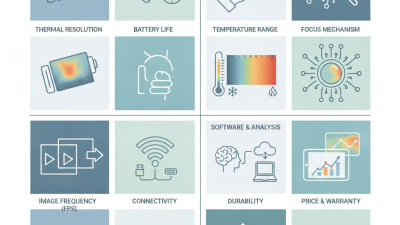
Picking out a China-made Mobile Thermal Camera isn’t just about comparing prices or the advertised resolution. Buyers around the world should really think about the image quality, how accurate the temperature readings are, whether it’s compatible with their phone, what kind of software support is available, and the warranty terms. I mean, according to Grand View Research, the global thermal imaging market hit around USD 4.57 billion in 2023, and they’re expecting it to grow at about 7.5% each year from 2024 to 2030. That number covers all kinds of thermal imaging products—not just mobile cameras—so it suggests there's a real growing demand, especially in areas like inspections, building maintenance, and industrial work.
When you're comparing options, it helps to think about what you'll actually use the camera for. Can it spot a hot electrical connection inside a crowded cabinet? Does the app make it easy to see measurement ranges or save images? Also, pay attention to things like the resolution of the detector, how accurate it claims to be, the focusing method, operating temperature range, and whether it connects easily to your phone’s port and supports your device’s OS. Don’t hesitate to ask suppliers for datasheets, calibration info, sample images, or their warranty details in writing because, honestly, those little details matter a lot.
There’s no one perfect model for everyone. Someone doing quick site inspections might prefer a small, handy attachment, while a tech who’s out in the field all day could need a tough, handheld device. I’d be a bit cautious about overly-precise marketing claims; they usually need some solid test data behind them. It’s easy to overlook that part. Also, it’s smart to double-check things like software updates, regional service support, and even how they handle shipping before you hit the buy button. This guide focuses on practical features and the kind of evidence suppliers should provide, so you can make smarter decisions without mistaking market hype for real performance.
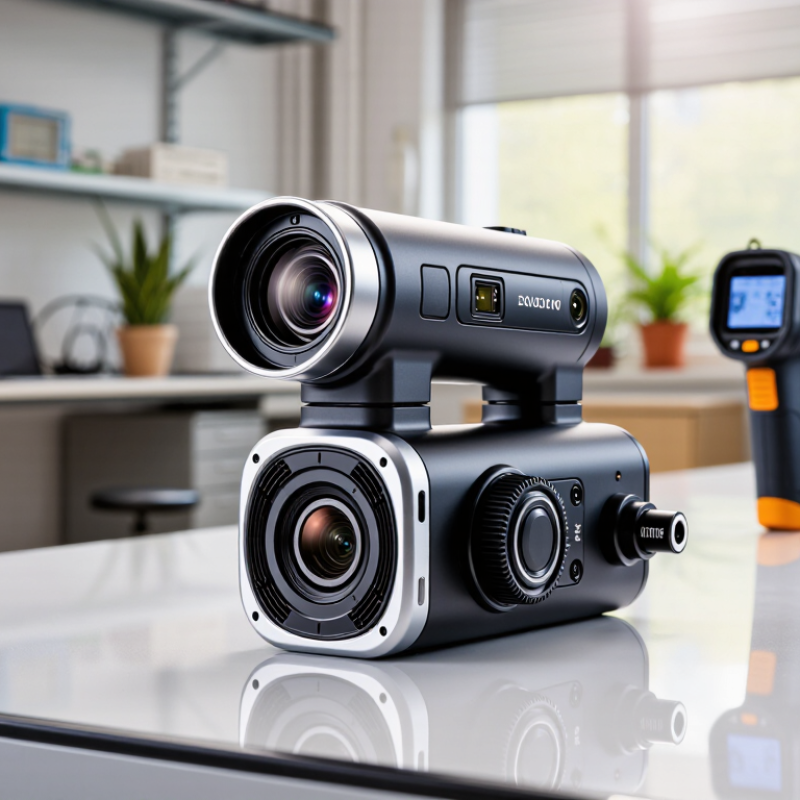
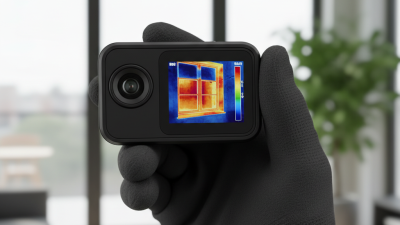
A mobile thermal camera is a compact infrared sensor that works with a smartphone, either as an attachment or as part of the device. It detects infrared energy from surfaces and turns temperature differences into a color image. Warm areas may appear bright, while cooler areas look darker, depending on the selected palette. It does not take an ordinary photograph. It measures heat patterns.
A Mobile Thermal Camera App displays the image and may show spot temperatures, palettes, or saved readings. On a practical inspection, you might scan a wall and notice a cold patch near a window frame, or check whether a motor housing is warmer than nearby parts. These readings are estimates, not a diagnosis. Distance, surface material, reflections, and ambient temperature can affect results. Small details matter. I have found that a clear image can still invite the wrong conclusion if the surface is reflective or the camera is out of focus. For consistent comparisons, use the same viewing angle and settings, and record conditions alongside images. For safety-critical checks, confirm findings with suitable instruments or a qualified technician.
A mobile thermal camera does not see heat as visible light. Its lens gathers infrared radiation, usually in the long-wave band around 8–14 μm, and directs it onto a detector. Wien’s displacement law gives a useful reference: a surface at 300 K has peak emission near 9.7 μm. The camera converts each detector pixel’s signal into a temperature estimate, then displays differences as a thermal image. A warm pipe may appear bright beside a cooler wall.
Sensitivity and accuracy are not the same. A 50 mK NETD rating represents a 0.05°C temperature difference under stated test conditions; it does not promise absolute readings within 0.05°C. Focus, distance, and the target’s surface finish also affect results. A shiny metal fitting can reflect a person or nearby heater, creating a misleading hot patch.
ASTM E1934-99a and ISO 18434-1:2008 describe practices for interpreting infrared condition-monitoring images, including attention to emissivity and reflected radiation. In the field, compare similar surfaces and check suspicious readings from another angle. Small details matter. I would treat a vivid color map as a clue, not proof; mobile cameras make quick checks easy, but rushed interpretation is still a real weakness.
For global buyers, compare native thermal resolution before advertised image size. A 256 × 192 sensor reveals more detail than an upscaled image. Check thermal sensitivity too: a lower NETD, such as 50 mK, helps show subtle temperature differences on a pipe or circuit board. Verify stated accuracy, measurement range, field of view, focus method, and frame rate. These affect whether readings are useful at close range or across a room.
The International Energy Agency’s 2023 tracking report estimates that building operations account for about 30% of global final energy use. That makes reliable thermal checks valuable for finding insulation gaps and overheating equipment. Compare emissivity settings and reflected-temperature compensation; ASTM E1933 describes practices for measuring and compensating for emissivity in infrared imaging. Also check phone compatibility, app support, battery draw, calibration documentation, and the operating temperature range. A neat specification sheet can still disappoint if the camera loses connection during a roof inspection.
Tips: Test the camera on a warm mug and a cool wall before field use. Keep distance and viewing angle consistent. Ask for sample images and calibration details. Small differences matter. Don’t compare resolution alone; sensitivity and measurement accuracy deserve equal attention.
Compare common thermal detector resolutions by their pixel count.
Higher detector resolution provides more image pixels, which can help reveal finer thermal detail. These are resolution formats, not comparisons of specific products; actual performance also depends on lens, sensitivity, calibration, and software.
A mobile thermal camera helps technicians see heat patterns that ordinary photos cannot show. In factories, it can reveal loose electrical connections, overloaded circuits, and motor friction before visible damage appears. Building inspectors use it to locate missing insulation, moisture-related temperature changes, and uneven heating around windows. Maintenance teams can save time by checking many points without dismantling equipment.
The Thermal Camera Mobile App makes field work more practical. Users can view live images, add temperature readings, and attach notes to inspection reports. In agriculture, thermal imaging can help identify uneven irrigation and plant stress, but weather and sunlight may affect results. In vehicle servicing, it can highlight unusual heat near brakes, bearings, or cooling systems. A hot area is not always a fault. I still verify readings with contact instruments and operating records.
Tips: Check the emissivity setting before measuring different surfaces. Clean lenses regularly. Avoid reading through glass. Let equipment reach normal operating temperature. Compare the same component over time, not only once. Select suitable temperature ranges and a stable mobile connection. Some apps feel smooth in the workshop but slow outdoors. That small weakness matters. Reliable inspections need training, clear records, and careful human judgment.
Evaluating a Chinese manufacturer takes more than comparing advertised pixel counts or the lowest quote. For a Mobile Thermal Imaging Camera, check detector resolution, thermal sensitivity, focus range, and whether readings remain stable after warm-up. Ask for a current calibration certificate and a sample report showing accuracy across several temperatures. These are practical checks.
MarketsandMarkets’ Thermal Imaging Market report estimated a global market value of USD 6.6 billion in 2024. It projected USD 10.4 billion by 2029, reflecting rising demand across industrial and security applications. That forecast signals a busy supply chain, not automatic product quality.
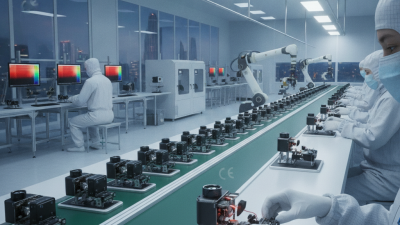
Request a production sample, then compare it with a trusted reference under identical conditions. Inspect the lens, connector, app workflow, battery drain, and image consistency—not just the specification sheet. Ask how units are batch-tested, how firmware updates are handled, and what repair turnaround the supplier can document.
Check ingress and drop-test evidence for field use involving rain, dust, or repeated handling. A factory video is useful, but it cannot replace dated test records or a written warranty. Small gaps matter.
I would still treat supplier claims cautiously; a checklist cannot predict every failure in a hot vehicle or cold site.
China Best Mobile Thermal Camera for Global Buyers?
Global Buying, Compatibility, and Compliance Considerations
Global buyers should compare more than resolution and price. Grand View Research estimated the global thermal imaging market at about USD 4.5 billion in 2023, with continued growth expected through 2030. A Mobile Thermal Imager still needs to fit the user’s actual workflow: check connector type, operating-system support, app permissions, temperature range, and image export formats. A USB-C plug alone does not guarantee compatibility. Small detail. Big risk.
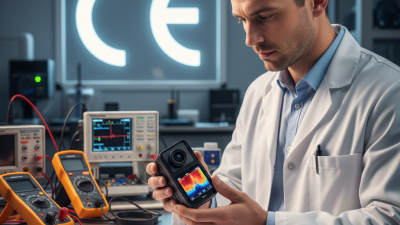
The ITU’s Facts and Figures 2023 report estimated that 5.4 billion people were online, yet internet access does not ensure a thermal camera app will work reliably. Test the camera with the exact phone model and operating-system version before placing a bulk order. For cross-border purchasing, ask for applicable conformity documents, calibration information, battery details, and clear warranty terms. Requirements differ by destination and product configuration; a neat specification sheet may still leave important questions unanswered.
Tips: Request a sample unit and test it in real working conditions. Check image sharing, charging, and support response times before committing.
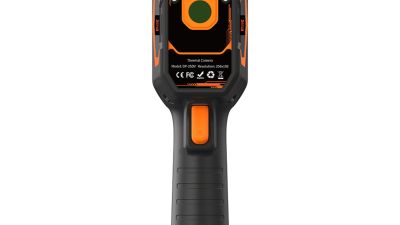
Infrared inspection makes temperature patterns visible, helping inspectors spot developing problems before they can be seen with the naked eye. The DP-25DV handheld thermal imager features 512 × 384 infrared resolution, upgraded from 256 × 192 for clearer thermal images, plus 1080P visible-light imaging to capture context and surface details that infrared alone cannot show. This combination is useful for checking electrical panels, appliances, vehicle components, and areas of a home where heat patterns may indicate a need for closer investigation.
The International Energy Agency’s *2023 Global Status Report for Buildings and Construction* estimates that buildings accounted for 30% of global final energy consumption and 26% of energy-related emissions in 2022. In home maintenance, thermal imaging can help locate temperature anomalies around insulation, heating systems, and electrical equipment, supporting more focused follow-up checks. It is a screening tool rather than a stand-alone diagnosis: readings can be affected by surface materials, reflected heat, distance, and environmental conditions. For best results, compare thermal patterns with visible-light images and confirm suspected issues using appropriate inspection methods.
It detects infrared energy and displays temperature patterns as colors. It does not take an ordinary photograph. Not a diagnosis.
It may show cold patches near windows or uneven heating across a wall. Surface material, reflections, and room conditions can affect the image.
They can scan motors, electrical connections, brakes, or bearings for unusual heat. A warm spot is not always a fault. Check it against operating records or another suitable instrument.
Distance, focus, surface reflectivity, and ambient temperature can change results. Avoid measuring through glass. That detail is easy to miss.
Use the same viewing angle and settings when comparing readings. Record conditions with each image, and let equipment reach its normal operating temperature.
Review detector resolution, thermal sensitivity, focus range, and measurement stability after warm-up. Ask for a current calibration certificate and sample reports across several temperatures.
It helps, but compare it with a trusted reference under identical conditions. Inspect the lens, connector, app workflow, and battery use. I would still want dated test records.
It may reveal uneven irrigation or plant stress. Sunlight and weather can affect the image, so one scan may not tell the whole story.
A Mobile Thermal Camera turns a compatible phone or mobile device into a tool for viewing temperature patterns. It detects infrared energy emitted by objects and displays differences as thermal images, helping users spot unusual heat or cold without relying on visible light. When comparing models, buyers should consider temperature range and accuracy, image resolution, sensitivity, refresh rate, connection type, battery demands, software features, and compatibility with their devices.
Mobile thermal cameras can support inspections in construction, electrical maintenance, HVAC, manufacturing, agriculture, and other fields where identifying temperature variations is useful. When evaluating manufacturers in China, assess product specifications, quality-control practices, technical support, documentation, and sample-testing options. Global buyers should also confirm that the camera works with their operating systems and interfaces, check regional import and product-compliance requirements, and clarify warranty terms, shipping arrangements, and after-sales service before purchasing.