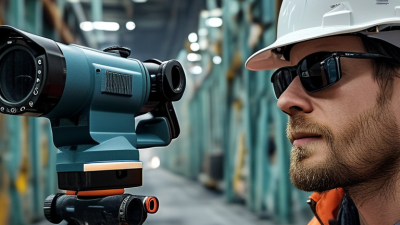
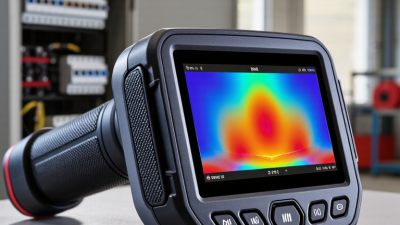
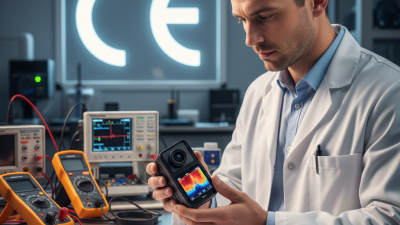
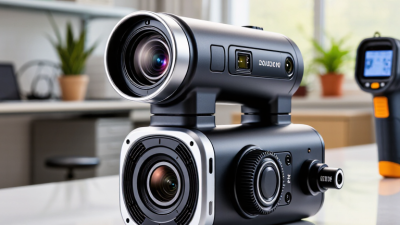
An [Infrared Thermal Camera](https://www.dytinfrared.com/discount-odm-infrared-thermal-camera-supplier-factories) basically turns heat into a visual image—you know, it doesn’t rely on regular visible light like your usual cameras do. Instead, it detects infrared radiation, which is emitted by stuff like people, machines, buildings, or pretty much anything warmer than its surroundings. Usually, the warmer areas show up as brighter spots, but just a heads-up—color palettes can be a bit tricky for folks who aren’t super experienced. Like, a bright white spot doesn’t automatically mean something’s wrong or a fault.
Here's how it works: it starts with a special lens—often made from germanium—that focuses the thermal energy onto what’s called a microbolometer array. Each tiny pixel changes its electrical resistance depending on the temperature, and then the software transforms all these signals into a temperature map you can interpret. But, keep in mind, factors like emissivity, reflected heat, distance, humidity, and airflow all influence what you see. Small details really matter. For instance, a shiny metal pipe might reflect heat from a nearby heater, creating a false hotspot—so you gotta be careful.
According to MarketsandMarkets’ 2024 Thermal Imaging Market report, the industry is expected to grow quite a bit through 2030—mainly because of increased use in industrial inspections, energy management, security, and medical research. Similarly, Grand View Research points out that there's rising demand for compact, connected thermal systems. All these reports show that the market’s got serious momentum, but it’s important to remember—they don’t guarantee perfect measurements. Field calibration is still really important.
Andrey Rogalski, a researcher in infrared detection, once said, “Infrared detector technology has made tremendous progress over the last few decades.” Now, that’s true—it’s gotten faster, smaller, and more sensitive. But, here’s the thing: technology alone can’t do all the work. A skilled professional still needs to have a good reference point—like knowing what a surface’s actual temperature should be, or understanding what they’re inspecting. That’s basically what this guide’s about: understanding how an Infrared Thermal Camera works, what that picture really shows, and where you might get fooled. Honestly, one of the biggest takeaways is pretty simple—heat can be measured pretty accurately, but understanding the context? That’s a whole different game. Because, at the end of the day, heat is measurable. Context is not.
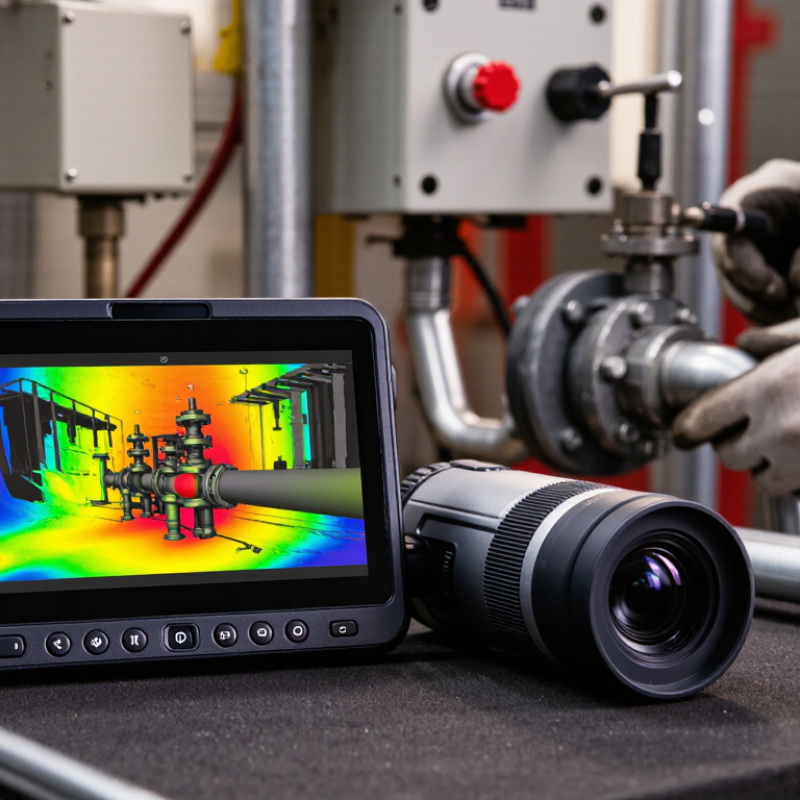
Definition and Core Purpose of an Infrared Thermal Camera
An infrared thermal camera is a non-contact device that detects infrared energy from surfaces. Every object above absolute zero releases some thermal radiation. The camera converts this invisible energy into a visual temperature map, often called a thermogram. Warm areas appear brighter, while cooler areas show darker tones. Its core purpose is simple: reveal temperature differences that ordinary vision cannot show. This helps users inspect electrical panels, machine bearings, building insulation, and heating systems without touching them.
In practical work, a small hot spot on a circuit connection may signal resistance or a loose contact. A cool strip beside a window may suggest missing insulation. However, color alone does not prove a fault. Surface material, reflected heat, wind, distance, and camera focus can change the reading. Thermal imaging is useful evidence, not a final diagnosis. I have found that even a stable-looking surface deserves a second check when the surrounding conditions seem unusual.
Tips: Let the camera adjust to the environment before measuring. Keep the lens clean and aim straight at the target. Check the material’s emissivity when accuracy matters. A Thermal Infrared Camera App can help record images, add temperature notes, and compare changes over time. Still, app-based readings may vary between devices. That limitation is easy to overlook. Recheck important measurements with suitable instruments and trained judgment.
The Infrared Radiation and Heat Patterns It Detects
An infrared thermal camera does not see heat itself. It measures infrared radiation emitted from objects and converts that energy into visible heat patterns. Every object above absolute zero releases some infrared energy. Warmer surfaces usually emit more, creating brighter or darker areas on the display.
That sounds simple. It is not.
A warm handprint may remain visible on a wall after someone walks away. A loose electrical connection can appear as a small, bright hotspot beside cooler wiring. In buildings, uneven ceiling patterns may suggest missing insulation or trapped moisture. These patterns show temperature differences, not automatic proof of a fault. The camera reveals clues that require careful interpretation.
Surface material matters greatly.
A matte painted wall often gives a dependable reading, while polished metal can reflect nearby heat and mislead the operator. Distance, airflow, sunlight, focus, and camera calibration also affect the result.
I once treated a bright reflection as a hot surface, then checked it with contact measurement and found the mistake. That error was useful. It reminded me to compare thermal images with physical conditions and, when appropriate, a calibrated thermometer. Thermal imaging supports professional inspection, but it does not replace measurement, experience, or informed judgment.
Key Components Inside a Thermal Imaging Camera
What Is an Infrared Thermal Camera and How Does It Work?
An infrared thermal camera detects heat energy rather than visible light. Its lens focuses infrared radiation onto a thermal sensor, often called a microbolometer. Each sensor element responds to temperature changes and creates tiny electrical signals. A processing circuit converts these signals into colored or grayscale pixels. Warmer surfaces may appear white, orange, or red, while cooler areas look blue or purple.
Key Components Inside a Thermal Imaging Camera
The infrared lens is important because ordinary glass can block much infrared radiation. The sensor measures heat patterns across walls, motors, pipes, or electrical panels. A signal processor then improves contrast and calculates apparent temperature. The display shows the result, while internal memory stores images and temperature data. A stable power system keeps the camera operating during inspections. Some models also connect to an Infrared Thermal Camera App for live viewing, reporting, and basic analysis. However, the image is not automatically the truth. Shiny metal can reflect nearby heat and produce misleading readings. Reflections are easy to miss.
Tips: Keep the lens clean and avoid touching it during inspection. Allow the camera to adjust to the surrounding temperature. Check emissivity settings before measuring painted surfaces, skin, or metal. Compare suspicious areas with nearby surfaces. A temperature difference often matters more than one isolated number. Also, remember that thermal cameras show surface conditions, not hidden internal temperatures. There is room for error. Temperature readings should support careful inspection, not replace it.
Understanding Temperature Differences and Thermal Colors
An infrared thermal camera detects infrared radiation and converts it into estimated surface temperatures. It does not see heat directly. Instead, it interprets emitted energy, emissivity, distance, and reflected radiation. Temperature differences become visible patterns. A warm electrical connection may appear yellow, while nearby cooler metal looks purple or blue.
Thermal colors are not universal temperature codes. A red area is not automatically dangerous. The selected palette, scale, and range can change the image dramatically. A narrow temperature range may exaggerate a small difference. A wide range can hide it. In field inspections, I would record the spot temperature, ambient conditions, and emissivity setting, not rely on color alone. Shiny metal is especially difficult because it reflects surrounding heat. A bright patch may be a reflection, not overheating.
The U.S. Energy Information Administration reported that space heating and cooling represented about 48% of household energy use in its 2020 Residential Energy Consumption Survey. Thermal imaging can help locate uneven insulation, blocked airflow, or overheated components within that energy picture. Globally, the International Energy Agency reports that buildings consume about 30% of final energy and produce roughly 26% of energy-related emissions. These figures explain the camera’s practical value, but they do not make every image reliable. Poor focus, wet surfaces, wind, and incorrect settings can distort results. Thermal evidence should support physical checks and documented measurements.
Factors That Influence Thermal Camera Accuracy
An Infrared Thermal Imaging Camera detects infrared radiation and converts it into temperature patterns.
Accuracy depends on more than sensor resolution. Emissivity, distance, focus, humidity, and reflected heat can all distort readings. Small details matter.
Surface emissivity is critical. A painted wall may have an emissivity near 0.95, while polished metal can reflect surrounding heat instead of showing its own temperature.
ISO 18434-1 identifies emissivity, reflected temperature, atmospheric transmission, and distance as essential measurement factors. ASTM E1933-23 also supports blackbody-based verification and traceable calibration. Many industrial specifications allow approximately ±2°C or ±2%, whichever is greater, under controlled conditions.
Focus matters.
A blurred edge can spread heat across several pixels. The target should fill enough of the camera’s field of view. Long distances increase atmospheric absorption, especially in humid air.
Direct sunlight, airflow, and recently heated surfaces create additional errors. A technician should record ambient temperature, humidity, distance, and emissivity settings beside each image. This makes later review more reliable.
Yet field conditions rarely stay perfect. That is the uncomfortable part. A bright temperature spot may be a reflection, not a fault. Rechecking from another angle can expose it. Calibration should follow the interval recommended by the manufacturer and be verified against a certified reference source. Guessing is cheaper, but rarely dependable.
Common Applications of Infrared Thermal Imaging
What Is an Infrared Thermal Camera and How Does It Work?
Common Applications of Infrared Thermal Imaging
An infrared thermal camera detects heat energy rather than visible light. It converts surface temperature differences into a colored image. A loose electrical connection may appear as a bright orange spot. A wet wall can also look cooler than nearby materials. Technicians use these patterns to investigate equipment, buildings, and machinery without physical contact.
In electrical maintenance, thermal imaging helps identify overloaded circuits, damaged connections, and uneven heating. The U.S. Department of Energy’s Operations & Maintenance Best Practices Guide reports that predictive maintenance can reduce maintenance costs by about 8% to 12%. That figure depends on equipment, training, and inspection quality. A camera does not repair a fault. It only reveals a thermal clue.
Building inspectors use infrared cameras to locate insulation gaps, air leakage, and possible moisture intrusion. The International Energy Agency reported that building operations and construction represented about 30% of global energy demand. Small thermal losses can become expensive across large facilities. Industrial teams also scan motors, bearings, pipelines, and solar equipment. A hot bearing is a warning, not proof. Reflections, wind, emissivity, and distance can distort readings. Experienced users verify findings with electrical tests, moisture meters, or repeated inspections. Sometimes, the first image is simply wrong.
How the CA-60D Professional Thermal Analyzer Improves Thermal Testing Accuracy
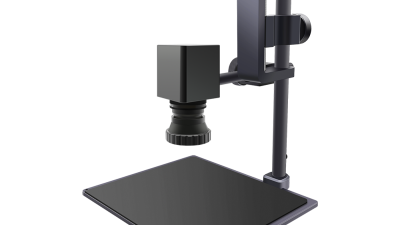
Accurate thermal testing depends on more than simply capturing a temperature image. The CA-60D Professional Thermal Analyzer is designed for laboratory environments where small temperature variations and complex thermal behaviors must be measured reliably. Its 640 × 512 infrared detector and thermal sensitivity below 50 mK help reveal subtle hot spots, temperature gradients, and heat-transfer changes that may be overlooked by conventional portable inspection equipment. This higher level of detail supports more consistent evaluation of thermal designs, components, and materials.
The system also improves testing accuracy by combining high-resolution imaging with comprehensive data analysis. PC-compatible software records complete radiometric video streams, allowing researchers to review temperature changes frame by frame and correlate results across multiple dimensions. External sensors can be connected for synchronized collection of temperature, voltage, and current data, making it easier to identify how electrical loading affects thermal performance. This coordinated approach reduces reliance on isolated measurements and provides a clearer understanding of real operating conditions.
With performance positioned between portable instruments and high-cost research systems, the CA-60D is suitable for R&D laboratories studying thermal management strategies, semiconductor characteristics, and material responses under varying loads. Its benchtop design supports repeatable test setups, while synchronized measurement and detailed thermal data help researchers make better-informed decisions during development and validation.
Conclusion
An Infrared Thermal Camera is a device that detects infrared radiation emitted by objects and converts heat patterns into visual information. Unlike a standard camera, it does not rely on visible light; instead, it uses a thermal sensor, optics, signal-processing circuits, and a display system to measure differences in infrared energy. These differences are translated into a thermal image, where colors or grayscale tones represent relative temperature levels. Warmer areas may appear brighter or in warmer colors, while cooler areas appear darker or in cooler colors, depending on the selected display palette.
Thermal camera accuracy can be influenced by factors such as distance, surface emissivity, reflected heat, humidity, atmospheric conditions, focus, and sensor quality. Proper calibration and measurement technique are therefore important for reliable results. Infrared thermal imaging is commonly used for building inspections, electrical and mechanical maintenance, industrial process monitoring, equipment diagnostics, environmental observation, and non-contact temperature assessment.