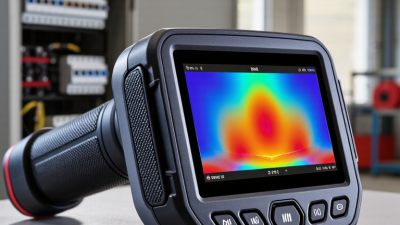
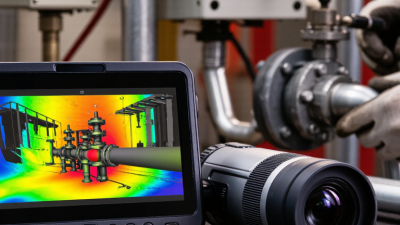
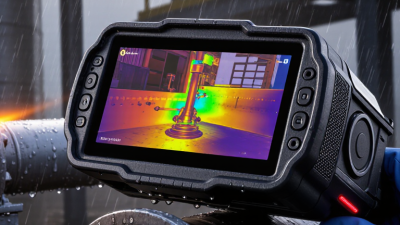
China’s thermal-imaging market is packed with manufacturers that cater to security, industrial inspection, research, and infrastructure monitoring. But if you’re trying to pick one of the top long-range thermal camera makers, here’s the thing: don’t just take the product brochure at face value. A camera’s real-world reach isn’t simply whatever detection distance they print on the spec sheet. Honestly, what operators can actually make out in the field depends on a whole bunch of stuff—sensor resolution, lens focal length, thermal sensitivity, image processing, and even how big the target is. It’s never just one thing, you know?
Honestly, the details are where it’s at. You can’t just skim the specs—really compare detector specs, supported frame rates, stabilization, environmental protection, and the interfaces on offer. A 640×512 sensor might give you decent image detail, but the lens and viewing conditions still make or break it. So ask the manufacturers directly: give me test data for my specific application, and explain your measurement methods in plain English. Before you dive in, it’s worth double-checking whether you can actually get integration support, software updates, calibration, and technical service in the market you’re targeting. You know, the stuff that can really make or break things later.
Sure, that kind of comparison helps—but it only gets you so far. Out in the real world, you’ve got rain, heat shimmer, moving targets, uneven backgrounds. No spec sheet can truly capture that. So in this piece, I’ll walk you through how to compare manufacturers on product range, technical transparency, customization options, and after-sales support. I’ll also try to separate what’s actually verified from what still needs independent confirmation. And one more thing: the supplier with the biggest stated range isn’t always the strongest. It’s the one that actually fits what you’re trying to do, what you can spend, and where it’ll be running—and you can look at the evidence before you make up your mind.
What Defines a Long-Range Thermal Camera?
A long-range thermal camera is not defined by distance alone. It must show a target clearly enough for a specific task, such as detecting a person-sized heat source across an open field. Lens focal length, sensor resolution, target size, temperature contrast, humidity, and haze all affect the result. A distant object may appear as only a few warm pixels. That is a real limit.
IEC 62676-4:2014 gives surveillance planning benchmarks of 25 pixels per meter for detection, 125 for recognition, and 250 for identification. These figures are useful context, not a thermal-camera guarantee; the standard is not a universal long-range thermal rating. Thermal imaging also relies on target contrast, not just pixel count. The U.S. Army’s Johnson criteria likewise frame imaging performance around whether an observer can detect, recognize, or identify a target. Conditions matter. In field evaluations, compare the same target and task at the stated distance, and check the lens, sensor resolution, and test conditions. A single “maximum range” number can sound precise while hiding important assumptions. The term remains a little fuzzy.
What Defines a Long-Range Thermal Camera?
Estimated horizontal pixels across a 0.5 m-wide target at different distances. A longer focal length places more pixels on the target, while actual detection range also depends on sensor resolution, thermal contrast, atmospheric conditions, and image processing.
Illustrative estimates calculated using a 640-pixel horizontal detector, 12 μm pixel pitch, and a simplified geometric model. These are not product specifications or detection guarantees.
Key Technologies Used in Long-Range Thermal Imaging
A Long-Range Thermal Imager depends on more than detector resolution. Its lens must gather enough infrared energy and keep distant targets sharply focused. Longer focal lengths can reveal smaller details, but they narrow the viewing angle and demand steadier mounting.
Detector choice also matters. Cooled sensors can offer strong sensitivity for demanding, extended-range tasks, while uncooled sensors are often simpler to operate. Neither choice guarantees a useful image. Pixel size, thermal sensitivity, calibration, and image processing all affect what an operator can distinguish.
Small differences matter.
Stabilization helps reduce blur when equipment vibrates or tracks a moving scene. Atmospheric conditions matter, too. Water vapor, haze, rain, and heat shimmer can weaken infrared signals, so stated detection distances should be treated as test-specific, not universal. In practical evaluations, compare performance against targets of known size and temperature difference, at several distances. Keep notes on weather and lens settings.
This is easy to overlook. A high-contrast test target may look clear on a cool morning, then lose detail when the background warms.
Range claims deserve careful checking.
How to Evaluate Thermal Camera Manufacturers in China
Evaluating thermal camera manufacturers in China takes more than comparing prices or headline specifications. Ask for a current datasheet showing detector resolution, lens options, thermal sensitivity, calibration method, and operating limits. For Long Range Thermal Imaging, confirm what “range” means: detecting a target is not the same as identifying it. Request the target size and test conditions behind each distance claim.
Tips: Test a sample in realistic conditions. Record distance, weather, focus, and target temperature. Ask for calibration records, production quality checks, warranty terms, spare-part availability, and firmware support. Clear answers matter.
A capable supplier should explain how its camera performs in rain, haze, and changing temperatures, without promising identical results everywhere. Review sample images for edge detail and stable temperature readings, then compare them with your own acceptance criteria. If possible, involve the people who will install and operate the system; their feedback often reveals practical issues that a datasheet misses. No single test tells the whole story, and it is easy to overvalue a long-range number. That is worth reconsidering before purchase. Also check whether the supplier can document test methods and respond promptly to technical questions.
Leading Chinese Long-Range Thermal Camera Manufacturers
China’s long-range thermal camera manufacturers serve demanding applications in perimeter observation, infrastructure inspection, and search operations. Their capabilities vary, so buyers should compare specifications rather than rely on broad claims. Detector resolution matters, but lens quality, image processing, and calibration also shape useful detection distance. A high number on a datasheet does not guarantee clear identification in rain or haze.
For Long Distance Thermal Imaging, manufacturers may offer cooled or uncooled camera platforms, with different costs, power needs, and maintenance requirements. Ask how performance is measured, including target size, weather, and image criteria. Request sample footage captured at a comparable distance, not just a laboratory demonstration. Details matter. Stable focus, dependable housing, and straightforward integration can be as important as sensor specifications.
Experienced suppliers usually explain limitations alongside capabilities and provide practical guidance on installation and testing. Check production consistency, quality-control procedures, warranty terms, and technical support before making a decision. A useful evaluation includes night testing, changing temperatures, and realistic viewing angles. No supplier is perfect; field conditions can reveal gaps that a polished product sheet misses. That is worth acknowledging.
Comparing Camera Specifications and Applications
Long-range thermal cameras are best compared by more than their advertised detection distance. A 640 × 512 sensor can show finer thermal detail than a lower-resolution sensor, but lens choice matters just as much. A 50 mm lens offers a wider view than a 75 mm lens, while the narrower view can help inspect distant targets. Check the pixel pitch, thermal sensitivity, frame rate, and focus method together. Thermal Imaging Range figures depend on target size, humidity, and atmospheric conditions. Numbers need context.
For a perimeter, a wide field of view may help operators scan large areas. For power-line inspections, a narrower lens can reveal hot connectors from a safe standoff, provided the camera resolves enough detail. A frame rate around 25 or 30 Hz can make moving scenes easier to follow. Compare detection, recognition, and identification distances separately; they describe different levels of certainty. One caveat often gets missed: published tests may use ideal weather and a specific target. I would ask for the test conditions, then compare sample images at the distance that matters in real use. A specification sheet is useful, but it is not the whole story.
China Top Long Range Thermal Camera Manufacturers? - Comparing Camera Specifications and Applications
| Configuration type |
Typical thermal detector |
Common spectral band |
Lens options |
Sensitivity guidance |
Typical applications |
Key selection considerations |
| Long-range perimeter surveillance |
Uncooled VOx microbolometer; commonly 640 × 512 pixels |
Long-wave infrared (LWIR), typically 8–14 μm |
Motorized or fixed narrow-field lenses; focal lengths around 50–150 mm are available in this product class |
Many high-sensitivity uncooled systems specify NETD of 40 mK or lower; compare values at the same test conditions |
Perimeter monitoring, coastal observation, and intrusion detection |
Detection distance depends on target size, lens, atmospheric conditions, image processing, and the required detection or recognition level. |
| High-detail long-range observation |
Higher-resolution thermal detector, such as 1280 × 1024 pixels, where offered |
Usually LWIR for uncooled systems; confirm the detector band for each configuration |
Long focal-length optics, often with motorized focus and zoom options |
Check NETD together with pixel count, lens aperture, and image-processing performance |
Long-distance observation where more image detail is needed for target assessment |
Higher resolution alone does not guarantee longer detection distance; lens quality and target pixel coverage also matter. |
| Compact long-range monitoring |
Uncooled detector; commonly 384 × 288 or 640 × 512 pixels |
Typically LWIR, 8–14 μm |
Fixed or compact motorized lenses, selected to match the required field of view |
Compare stated NETD, frame rate, and performance in the intended ambient temperature range |
Remote site monitoring, utility assets, and compact security installations |
A narrower field of view can improve target pixel coverage but makes area scanning and initial target acquisition more difficult. |
| Thermal and visible-light dual-sensor system |
Thermal channel commonly uses 640 × 512 pixels; visible channel varies by system |
Thermal channel commonly LWIR; visible channel operates in the visible spectrum |
Thermal and visible lenses may be fixed or motorized; optical alignment and image fusion vary by design |
Assess the thermal channel's NETD separately from visible-camera low-light performance |
Border and perimeter security, infrastructure protection, and operator-assisted identification |
Visible imagery can support scene context, but it does not replace thermal performance in darkness, haze, or other challenging conditions. |
| Radiometric inspection at distance |
Radiometric thermal detector; commonly 640 × 512 pixels in higher-detail systems |
Often LWIR for uncooled inspection cameras |
Lens options depend on the required spot size and measurement distance |
Check temperature accuracy, calibration specifications, measurement range, and NETD; these are different performance measures |
Monitoring electrical equipment, industrial assets, and other temperature-sensitive installations |
Reliable temperature measurement requires correct focus, emissivity settings, suitable atmospheric compensation, and adequate target coverage. |
Note: This is a brand-neutral comparison of common long-range thermal-camera configurations, not a ranking or a list of verified manufacturer model specifications. Available resolutions, lens focal lengths, and performance vary by model. Detection distance should be validated for the actual target, scene, and required detection or recognition criteria.
How to Select a Manufacturer for Your Requirements
Choosing a long-range thermal camera manufacturer starts with the scene, not the advertised detection distance. Define what you need to identify, how far away it will be, and whether the target is moving. A person-sized target and a vehicle require different detail. Ask for pixel-on-target calculations using your actual lens, sensor resolution, and viewing distance.
Request test images or a field demonstration under conditions close to yours. Check performance at night, in haze, and against warm backgrounds. Ask how the manufacturer measures sensitivity, calibrates each unit, and reports range. A single impressive image proves little. Small details matter.
Review the enclosure, mounting options, power needs, and data interfaces. If the camera must run outdoors, ask about temperature limits, moisture protection, and service procedures. Clarify warranty terms, spare-part availability, and technical support response times. Compare the full system cost, including lenses, installation, and maintenance. A lower purchase price can hide expensive integration work. No specification sheet can capture every site condition, so leave room for an on-site trial. That extra step may feel slow, but skipping it can be costly.
Conclusion
This article explains what distinguishes a Long-Range Thermal camera, including its ability to detect heat signatures at extended distances and the factors that influence image clarity and detection performance. It introduces key technologies used in long-range thermal imaging, such as thermal sensors, optics, image processing, and stabilization, and describes how these components work together in different operating conditions.
The article also outlines practical ways to evaluate manufacturers in China, compare camera specifications, and match capabilities to applications such as industrial inspection, infrastructure monitoring, and perimeter observation. Rather than focusing on brand names, it offers a framework for assessing product quality, technical support, customization options, and communication. By considering range, resolution, environmental suitability, integration needs, and service requirements, readers can make a more informed choice of manufacturer for their specific project.