| Ingress Protection |
Minimum IP65; IP67 for regular outdoor use; IP68 for frequent exposure to water |
IP65 protects against dust and water jets. IP67 protects against temporary immersion, while IP68 provides a higher level of immersion protection under the manufacturer’s stated conditions. |
Outdoor inspection, marine work, utilities, emergency response, construction and industrial maintenance |
Confirm the exact test depth and duration for IP68, because these conditions are defined by the product manufacturer. |
| Thermal Resolution |
160 × 120 pixels for basic inspection; 256 × 192 pixels for general professional work; 384 × 288 pixels or higher for detailed analysis |
Higher resolution produces more image detail and helps distinguish smaller or more distant heat sources. |
Electrical panels, mechanical equipment, building envelopes, HVAC systems and vehicle diagnostics |
Resolution alone does not determine detection distance; lens angle, target size and atmospheric conditions also affect performance. |
| Thermal Sensitivity (NETD) |
≤50 mK for general inspection; ≤40 mK for detecting subtle temperature differences |
A lower Noise Equivalent Temperature Difference generally allows the camera to display smaller temperature variations, especially on low-contrast surfaces. |
Moisture-related inspection, insulation checks, electronics, process monitoring and preventive maintenance |
Compare NETD values measured under equivalent conditions and check whether the value is specified at a particular temperature. |
| Measurement Range |
Approximately -20°C to 550°C for general maintenance; wider ranges for high-temperature equipment |
A suitable measurement range prevents out-of-range readings and supports both cold-environment inspections and hot machinery checks. |
Electrical distribution, motors, pumps, boilers, furnaces and refrigeration systems |
Verify accuracy at the temperatures you actually measure; a wide range does not automatically mean equal accuracy throughout. |
| Temperature Accuracy |
Typically about ±2°C or ±2% of the reading, whichever is greater, for many handheld inspection cameras |
Reliable accuracy is essential when decisions depend on temperature thresholds, overheating levels or process limits. |
Electrical safety checks, equipment condition monitoring and quality control |
Accuracy depends on emissivity, reflected temperature, distance, humidity and the angle of observation. |
| Operating Temperature |
At least -10°C to 50°C for common field work; select a wider range for harsh climates |
The operating range indicates whether the camera can function reliably in cold mornings, hot work areas or changing outdoor conditions. |
Winter inspections, desert environments, warehouses, outdoor assets and industrial sites |
Do not confuse operating temperature with storage temperature or the camera’s object-measurement range. |
| Drop Resistance |
Around 2 m drop resistance for frequent field use |
A rugged enclosure helps protect the camera from accidental drops on concrete, ladders, platforms and vehicle floors. |
Construction, utilities, emergency services and mobile maintenance teams |
Check whether the stated drop rating applies to the complete assembled product and which test standard was used. |
| Screen and Controls |
At least a 3-inch color display with physical controls or a responsive touchscreen |
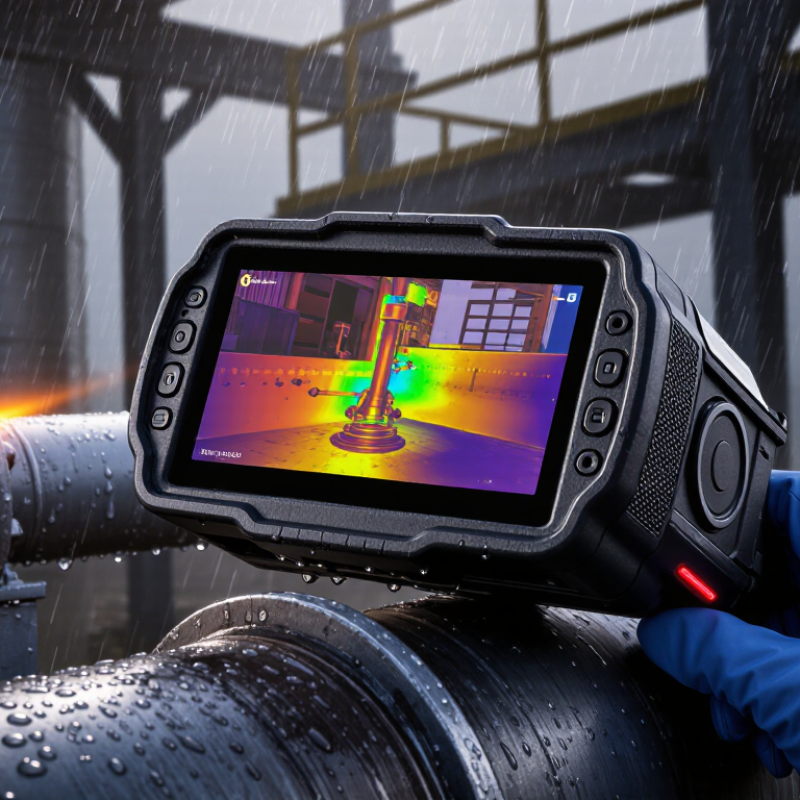
A clear screen and simple controls make it easier to review thermal patterns while wearing gloves or working in wet conditions. |
Rainy outdoor work, industrial floors, rooftops and service vehicles |
Check screen brightness, glove usability, menu language and visibility in direct sunlight. |
| Battery Runtime |
At least 4 hours of practical continuous use; replaceable batteries are preferable for extended work |
Longer runtime reduces interruptions during site surveys and avoids opening the enclosure unnecessarily in wet environments. |
Full-day inspections, remote sites, emergency response and maintenance rounds |
Review runtime with the display, wireless functions and image recording enabled, not only the laboratory standby figure. |
| Image and Data Storage |
Radiometric JPEG or equivalent files, plus USB-C or removable storage |
Radiometric images retain temperature information for later analysis, reporting and comparison with future inspections. |
Asset management, compliance records, insurance documentation and maintenance reports |
Confirm which areas of the image remain temperature-measurable and whether analysis software is included. |
| Connectivity |
USB data transfer; Wi-Fi or Bluetooth when remote reporting is required |
Wireless connectivity can speed up field reporting, but a wired option remains useful where wireless signals are restricted. |
Team inspections, digital work orders, remote assistance and cloud-based documentation |
Check compatibility with the required mobile operating systems, security policies and reporting platform. |
| Optical Camera |
Built-in visible-light camera with thermal and visual image fusion |
Visible-light reference images help identify components and explain the location of a thermal anomaly in reports. |
Complex electrical cabinets, pipe networks, rooftops and large mechanical systems |
Look for a clear alignment between thermal and visible images, especially when inspecting close-range targets. |
| Lens and Field of View |
Wide-angle lens for nearby equipment; narrower lens for distant or small targets |
Field of view determines how much of a scene is visible, while a narrower lens can place more pixels on a distant target. |
Building inspections, electrical rooms, overhead lines, tanks and production machinery |
Choose the lens according to typical distance and target size rather than selecting based only on resolution. |
| Emissivity and Measurement Tools |
Adjustable emissivity, reflected-temperature compensation, center spot and area or maximum-temperature tools |
These functions improve the usefulness of readings on different materials and help locate the hottest or coldest areas. |
Painted metal, plastics, insulation, pipes, motors and electrical connections |
Shiny metals can produce inaccurate readings because of reflected infrared energy; use suitable measurement techniques. |
| Maintenance and Sealing |
Sealed ports, protective lens cover and cleanable exterior |
Good sealing reduces the risk of water, dust and cleaning residue reaching sensitive internal components. |
Wet workshops, dusty sites, food-processing areas and outdoor infrastructure |
Follow the cleaning instructions and keep connector covers closed; waterproofing does not eliminate the need for routine care. |