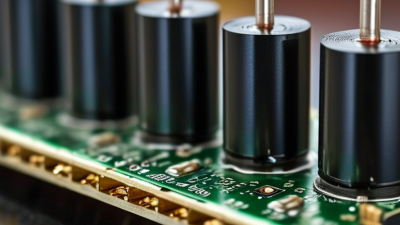
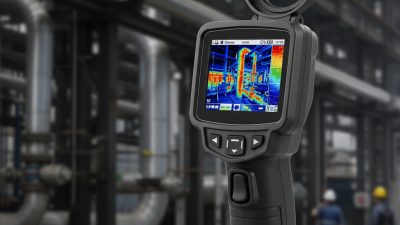
When you're sourcing globally, it's not just about getting the lowest unit price. That's where a Thermal Sensor Module comes in. It can keep an eye on temperature reliably across things like industrial equipment, HVAC systems, medical devices, and energy applications. And honestly? Its real value shows up when accurate readings help you run things more safely, control processes better, and handle maintenance before small issues turn into big ones. In real-world projects, engineers will often compare response time, operating range, interface compatibility, and long-term stability before they give a supplier the green light.
When you're sourcing, a solid process really should cover documented testing, calibration you can trace, and production controls that stay consistent. Supplier audits? They often uncover the kind of details you won't find in a glossy product brochure. And those details matter. Buyers might check how samples perform at different temperatures, look over failure data, and make sure packaging can handle humid conditions or long-distance shipping. It's also worth carefully checking standards compliance, since certification claims can differ from one market to another—and even between product versions. From what I've seen, experienced procurement teams will usually ask for technical drawings, inspection records, and change-control procedures before they commit to a bigger order.
But honestly, no sourcing decision is ever perfect. Sure, a module with great accuracy might cost more, or it could need some special integration work. Go cheaper, though, and you may run into hidden costs—stuff like recalibration, software tweaks, or shipments that show up late. Regional availability? That can change on you too, sometimes without much warning. So if you're buying globally, don't just look at the quoted price. Think total cost of ownership. And before committing, test some representative samples under real working conditions. It's also smart to keep a qualified backup supplier in your back pocket. At the end of the day, real proof still counts for more than bold promises. A Thermal Sensor Module? It’s not just another part you drop in. It’s one link in a measurement chain—one that has to stay trustworthy all the way from factory testing to life out in the field.

Thermal Sensor Modules Explained: RTDs, Thermocouples, Thermistors, and IC Sensors
Choosing a thermal sensor module starts with the temperature story, not the catalog. In field projects, I compare range, response time, wiring, calibration, and drift. RTDs deliver stable, repeatable readings across many process applications. IEC 60751 defines important platinum RTD requirements for reliable purchasing. Thermocouples tolerate high heat and vibration, but their millivolt signals require cold-junction compensation. Thermistors respond quickly and cost less, although their narrower range can punish poor specifications.
IC sensors simplify board design through digital or analog outputs. They suit compact equipment with controlled ambient conditions. They perform less confidently beside hot surfaces or strong thermal gradients. A Thermal Imaging Sensor Module is different. It maps temperatures across pixels, helping technicians locate loose connections or uneven heating. The 2023 Thermal Imaging Market report estimated global market value at USD 4.7 billion, rising to USD 6.5 billion by 2028. That growth shows practical demand, not universal suitability. Market reports often combine cameras, modules, and complete systems. Comparing like with like still needs discipline.
Tips: Request calibration evidence, operating limits, connector drawings, and sample data. Check IEC or ASTM references against your application. Ask for measurement uncertainty at three temperatures, not one. I would also test condensation, vibration, and cable routing before approving volume orders. Small omissions become expensive surprises.
Measurement Accuracy: IEC 60751 Class A RTDs Allow ±(0.15+0.002|t|)°C
Why Choose a Thermal Sensor Module for Global Sourcing?
Measurement accuracy often decides whether a thermal sensor module deserves global sourcing.
IEC 60751 Class A platinum RTDs allow ±(0.15 + 0.002|t|)°C.
At 0°C, the tolerance is ±0.15°C. At 100°C, it becomes ±0.35°C. At -40°C, it reaches ±0.23°C.
These figures come from the IEC 60751:2022 specification, not marketing language.
That difference matters on a factory floor. A temperature display may show 100.0°C, while the actual value could range from
99.65°C to 100.35°C.
Engineers should also examine wiring resistance, installation depth, vibration, and calibration drift.
The National Institute of Standards and Technology emphasizes traceable calibration and uncertainty evaluation in its measurement guidance.
A module with a high-grade RTD still needs a controlled signal path.
Global buyers can compare suppliers using measurable evidence. Request the RTD class, tolerance equation, calibration method, operating range, and test records.
Check whether the report identifies reference equipment and environmental conditions.
Small details reveal reliability. A perfect datasheet is not a perfect measurement. In real installations, connectors loosen, cables pick up noise, and thermal contact becomes uneven.
I have seen accuracy claims weaken when these practical conditions were ignored.
That is why IEC-based acceptance criteria should be reviewed alongside field testing and documented calibration intervals.
Temperature Ranges: IEC 60584-1 Defines Thermocouple Accuracy Classes
Why Choose a Thermal Sensor Module for Global Sourcing?
When sourcing a Thermal Module, temperature range alone cannot prove measurement quality. IEC 60584-1 defines thermocouple reference functions, tolerance classes, and applicable temperature intervals for different thermocouple types. Each class combines a fixed error limit or a percentage of the measured temperature. The larger value applies. This detail matters near process limits, where a few degrees can affect product quality.
A practical sourcing review should match the thermocouple type, accuracy class, wiring, and operating range. For example, a sensor rated for a broad range may offer lower accuracy in part of that range. Check the exact IEC table, not only a supplier’s headline specification. Also confirm cold-junction compensation, insulation, connector materials, and calibration records. In field testing, installation errors often exceed the sensor’s stated tolerance. That is easy to overlook.
Tips: Request a tolerance chart with minimum and maximum temperatures. Ask whether values are measured or calculated. Test sample modules at two or three realistic points, such as 0°C, 100°C, and 400°C. Record the surrounding temperature too. A small wiring mistake can look like sensor drift. I have seen specifications appear compliant until extension wire and connector effects were included. The standard improves comparability, but it does not replace application testing.
Why Choose a Thermal Sensor Module for Global Sourcing? - Temperature Ranges: IEC 60584-1 Defines Thermocouple Accuracy Classes
IEC 60584-1 Thermocouple Types, Temperature Ranges and Accuracy Classes
| Thermocouple Type |
Common Element Combination |
IEC 60584-1 Accuracy Class |
Standard Temperature Range |
Maximum Permissible Deviation |
Typical Sourcing Consideration |
| K |
Nickel–Chromium / Nickel–Silicon |
Class 1 |
−40 to +1,000 °C |
±1.5 °C from −40 to +375 °C; ±0.004 × |t| from +375 to +1,000 °C |
Broad availability and a practical choice for general industrial temperature measurement. |
| K |
Nickel–Chromium / Nickel–Silicon |
Class 2 |
−40 to +1,200 °C |
±2.5 °C from −40 to +333 °C; ±0.0075 × |t| from +333 to +1,200 °C |
Suitable where a wider operating range is more important than the tightest tolerance. |
| J |
Iron / Nickel–Copper |
Class 1 |
−40 to +750 °C |
±1.5 °C from −40 to +375 °C; ±0.004 × |t| from +375 to +750 °C |
Useful for moderate-temperature equipment; verify compatibility with oxidizing environments. |
| E |
Nickel–Chromium / Copper–Nickel |
Class 1 |
−40 to +800 °C |
±1.5 °C from −40 to +375 °C; ±0.004 × |t| from +375 to +800 °C |
Offers relatively high thermoelectric sensitivity for low- and medium-temperature applications. |
| N |
Nickel–Chromium–Silicon / Nickel–Silicon–Magnesium |
Class 1 |
−40 to +1,000 °C |
±1.5 °C from −40 to +375 °C; ±0.004 × |t| from +375 to +1,000 °C |
Considered for stable high-temperature service where thermocouple drift is a concern. |
| T |
Copper / Copper–Nickel |
Class 1 |
−40 to +350 °C |
±0.5 °C from −40 to +125 °C; ±0.004 × |t| from +125 to +350 °C |
A strong option for refrigeration, laboratories and other low-temperature measurements. |
| R |
Platinum–Rhodium / Platinum |
Class 1 |
0 to +1,600 °C |
±1.0 °C from 0 to +1,100 °C; ±[1.0 + 0.003 × (|t| − 1,100)] °C from +1,100 to +1,600 °C |
Selected for high-temperature applications; precious-metal content affects procurement cost. |
| S |
Platinum–Rhodium / Platinum |
Class 1 |
0 to +1,600 °C |
±1.0 °C from 0 to +1,100 °C; ±[1.0 + 0.003 × (|t| − 1,100)] °C from +1,100 to +1,600 °C |
Appropriate for demanding high-temperature measurement and calibration-related applications. |
| B |
Platinum–Rhodium / Platinum–Rhodium |
Class 1 |
+600 to +1,700 °C |
±1.5 °C |
Designed for very high-temperature environments; confirm the required minimum operating temperature. |
Technical notes:
-
t represents the measured temperature in degrees Celsius, and |t| is its absolute value.
- The listed deviations are maximum permissible deviations specified by IEC 60584-1 for thermocouple wires meeting the relevant class requirements.
- Actual module accuracy may also depend on cold-junction compensation, signal conditioning, connector materials, insulation, installation and calibration.
- For global sourcing, confirm the thermocouple type, IEC class, operating range, sheath material, response time, output interface and required documentation before comparing suppliers.
Global Sourcing Criteria: ISO 9001, RoHS 2011/65/EU, and REACH Compliance
Why Choose a Thermal Sensor Module for Global Sourcing?
Global sourcing requires more than temperature accuracy and competitive pricing. A thermal sensor module should come with clear quality records and traceable production controls. ISO 9001 certification indicates a structured quality management system, including documented processes, corrective actions, and supplier evaluation. It does not guarantee perfect products. Details matter.
RoHS Directive 2011/65/EU restricts hazardous substances in electrical and electronic equipment. Ask for current declarations, material records, and test reports that match the exact module configuration. REACH compliance also deserves careful review. It concerns chemical substances, including substances of very high concern. Confirm whether the supplier monitors updates and communicates relevant substance information through the supply chain.
Practical sourcing checks reveal important gaps. Inspect connector materials, cable insulation, soldering quality, and protective housing samples. Request batch identification and calibration records when measurement accuracy affects safety or process control. A thermal module may pass one test and still perform poorly after vibration, humidity, or repeated temperature changes. That risk is easy to underestimate. Supplier documents can also be incomplete, translated poorly, or linked to an older revision. This is where technical review becomes valuable. Compare certificates, declarations, drawings, and inspection results before approval. A small mismatch can create costly rework later.
Why Choose a Thermal Sensor Module for Global Sourcing?
Global sourcing should verify ISO 9001 quality-management controls, RoHS 2011/65/EU substance limits, and REACH chemical obligations. The chart shows the maximum RoHS concentration limits for restricted substances in homogeneous materials.
RoHS limits are 0.1% for most listed substances and 0.01% for cadmium by weight. Applicable exemptions may exist. REACH and ISO 9001 require separate supplier and product documentation reviews.
Environmental Protection: IP Ratings Specify Dust and Water Resistance Levels
When sourcing a Thermal Core Module globally, environmental protection deserves more than a checkbox. An IP rating describes resistance to solids and water under defined test conditions. The first digit indicates particle protection. The second addresses water exposure. IP65 generally means dust-tight construction and protection from water jets. It does not promise safe immersion. Small distinction. In a factory, powder may settle around connectors, while condensation forms during a cold-start cycle. A module tested in a clean laboratory may behave differently inside a humid enclosure.
Procurement teams should match the rating with the real installation site. Outdoor equipment may face rain, spray, dust, and sudden temperature changes. Indoor machinery may still require protection from coolant mist and cleaning procedures. Check test reports, sealing details, cable glands, and gasket materials. Ask whether the rating applies to the complete assembly or only the housing. IP claims can look reassuring, perhaps too reassuring. A damaged connector can weaken protection quickly. I have found that maintenance access is often overlooked during early selection. Repeated opening may affect seals, especially when technicians work quickly. The correct rating is useful, but installation quality remains equally important. Recheck the requirement.
Conclusion
A Thermal Sensor Module provides a reliable and flexible solution for monitoring temperature across industrial, commercial, and process-control applications. Common technologies include RTDs, thermocouples, thermistors, and integrated circuit sensors, each offering different levels of accuracy, response time, operating range, and installation flexibility. For precise measurements, IEC 60751 Class A RTDs allow an accuracy of ±(0.15 + 0.002|t|)°C, while IEC 60584-1 defines accuracy classes and performance expectations for thermocouples.
When sourcing globally, buyers should evaluate more than price. Suppliers should demonstrate ISO 9001 quality management and compliance with RoHS 2011/65/EU and REACH requirements. IP ratings are also important because they indicate protection against dust and water. A thorough supplier comparison should cover calibration procedures, minimum order quantities, lead times, traceability, documentation, and total cost. Choosing a qualified supplier helps ensure consistent performance, regulatory readiness, and dependable long-term supply.