
Application of Infrared Thermal Imaging in Distribution Cabinet Overheating Detection: A Case Study
Application of Infrared Thermal Imaging Technology in Electrical Equipment Hazard Detection: A Case Study of Overheating Detection in Distribution Cabinets
Project Background and Challenges
The high and low voltage distribution cabinets in the factory are in continuous operation under load. Due to factors such as equipment vibration, alternating temperature and humidity, as well as oxidation and corrosion, the connection terminals, copper busbars, and knife switch contacts are prone to hidden defects such as loose bolts, oxidized contact surfaces, and inaccurate compression. These defects are often not accompanied by sparking, tripping, or obvious visual abnormalities in the early stage, making them difficult to identify through manual visual inspection, and conventional electrical testing is also unable to detect them.
As the load continues to operate, the resistance at the contact poor points will continuously increase, leading to a continuous rise in temperature, which is highly likely to cause sparks, insulation aging, short circuits, tripping, and even result in electrical fires, causing major safety accidents such as factory shutdown and equipment damage.
The service target factory has over 20 distribution cabinets, and it urgently needs to conduct a special hazard inspection before the arrival of the summer high-temperature load. However, traditional power-off maintenance will seriously affect the continuity of production, and the manual routine inspection has a high rate of missed detections. The customer urgently needs a non-destructive screening solution that is live, efficient, and accurate.
Technical Principles and Difference Analysis
(1) Core Technical Principles
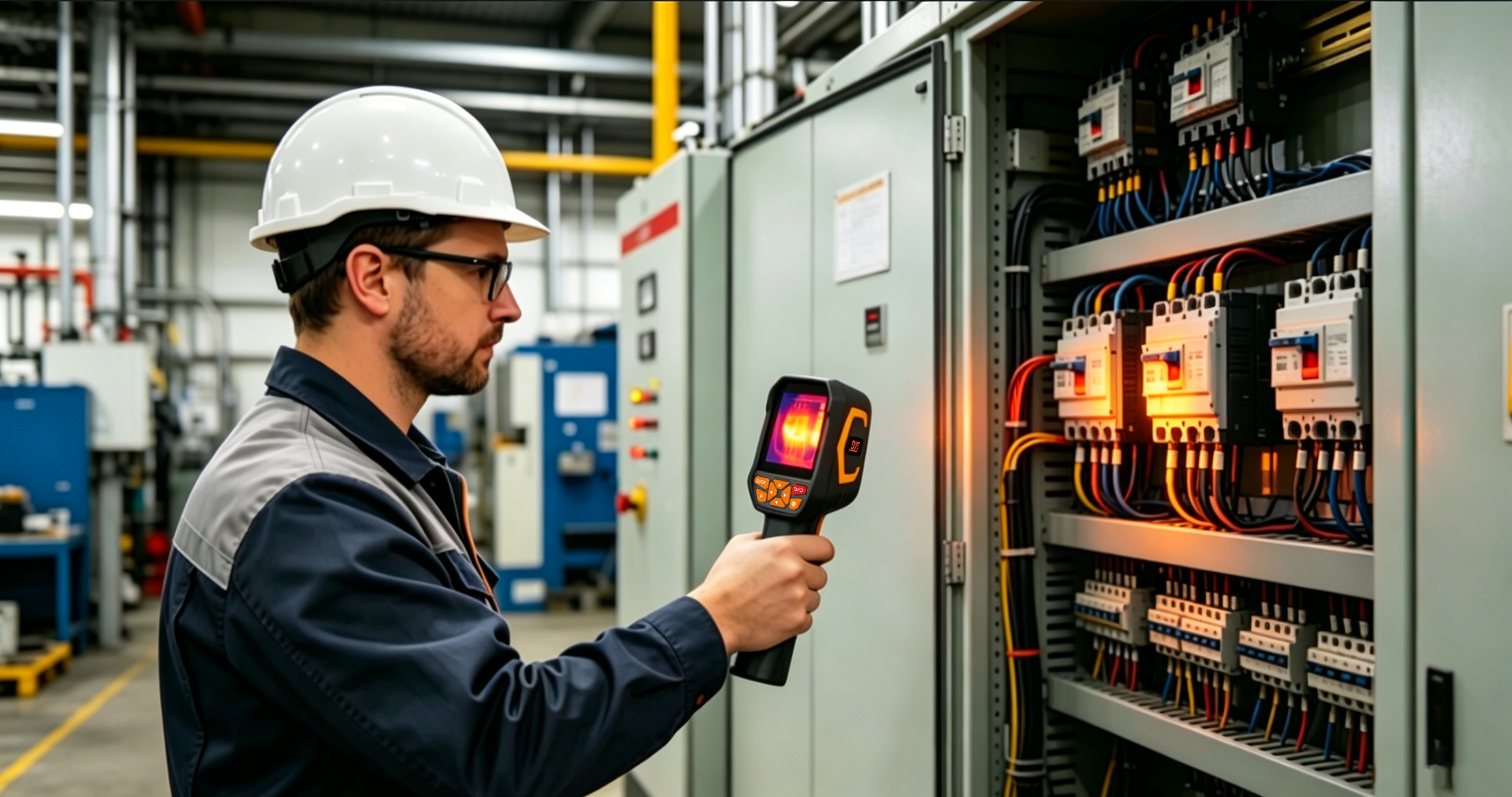
Based on the Joule heating effect, when the connection terminals of the distribution cabinet are not properly connected, the contact resistance increases abnormally, and when the load current passes through, a large amount of additional heat is generated, resulting in local abnormal temperature rise. The normal connection points have tight contact and stable resistance, with extremely low and uniform temperature rise; while the defective points have significantly higher temperatures than the surrounding normal points and adjacent points of the same phase. Infrared thermal imaging technology can precisely locate overheating hazard points through global temperature comparison.
Actual measurement thermal differences:
- Normal connection terminals: Under full-load operation, the temperature is ≤ 55℃, and the temperature difference between adjacent points and neighboring points is ≤ 8℃.
- Defective connection terminals: The temperature at the contact不良 points can reach 70–90℃, and the temperature difference from the normal points is ≥ 15℃. The hot spot characteristics on the thermal map are obvious.
(2) Comparison Analysis of Traditional Detection Methods
- Manual visual inspection: Can only detect obvious blackening and sparking marks, but cannot identify early temperature rise hazards.
- Power-off withstand voltage and resistance testing: Requires power-off and shutdown, which seriously affects production continuity, and the detection cycle is long and the cost is high.
- Single-point detection with infrared thermometer: Has many blind areas and large angle errors, cannot achieve full-point coverage within the cabinet, and has a high rate of missed detection.
- Infrared thermal imaging screening: Can be performed while energized, without production interruption, with global scanning, visual positioning, and precise identification of early latent overheating hazards, perfectly adapting to the regular safety inspection of electrical equipment.
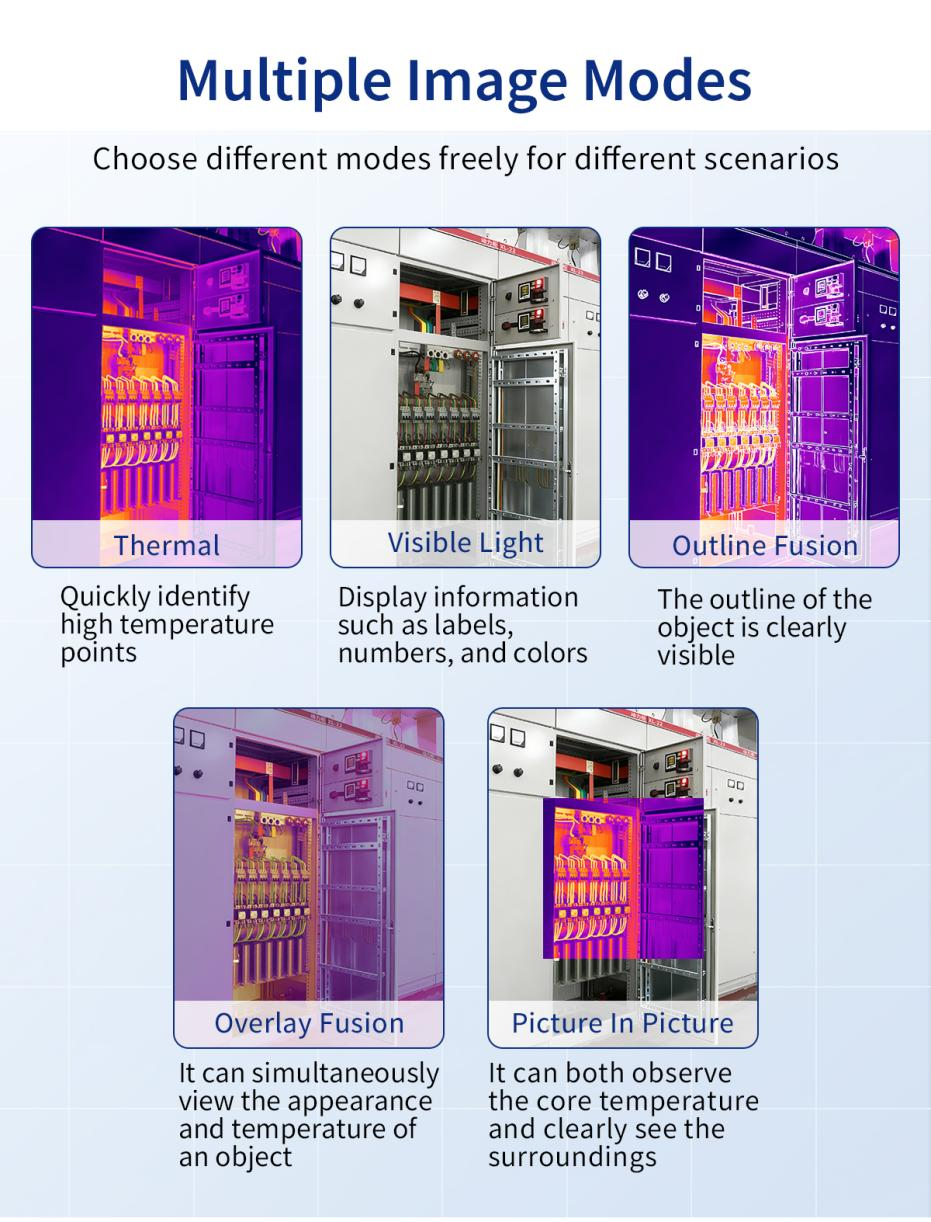
In response to the problem that the internal structure of the distribution cabinet is compact and the appearance of the connection terminals is highly similar, making it difficult to quickly locate abnormal positions and produce inspection reports using only infrared images, we have decided to adopt the DP-25DV handheld infrared thermal imager. This device not only can quickly determine temperature abnormalities through infrared images, but also can precisely locate the abnormal positions by combining with visible light images, significantly improving the efficiency of subsequent inspection report production.
Solution and Implementation Process
In order to achieve safe, efficient and accurate non-destructive screening, we have developed the following standardized operation procedures for the customer based on DP-25DV:
Step 1: Safety Condition Confirmation
Confirm that the distribution cabinet is operating normally under load, with stable load, strictly abide by the safety distance for high-voltage inspection, take insulation protection measures, and eliminate safety risks.
Step 2: Setting of Thermal Imaging Instrument Parameters
- Enable high-temperature tracking: Activate the automatic high-temperature tracking function of the device to ensure that the screen locks onto the highest temperature point in real time.
- Set high-temperature alarm: Set the temperature alarm threshold to 60℃, which is between the normal temperature (≤55℃) and the abnormal temper
- ature (70–90℃).
- Image mode: Adjust the image to the "edge fusion" mode. The combination of infrared and visible light can ensure a quick determination of the abnormal location.
Step 3: Comprehensive scanning of all positions inside the cabinet
Scan all key hotspots such as cable terminals, terminal blocks, copper busbar joints, knife switch contacts, fuses, and lead wire clamps in each cabinet, ensuring complete coverage without any blind spots. Take photos and save the data.
Step 4: Data comparison and archiving
Compare the temperatures of adjacent cabinets, the temperatures of adjacent positions, and historical inspection temperatures to determine the severity of the hazards. Establish an electrical equipment hazard ledger.
Exceptional determination
- When a heat source exceeding 60℃ appears in the image, the edge of the thermal imaging screen will flash a warning, and the buzzer will simultaneously sound an alarm.
- The high-temperature tracking icon will directly indicate the specific location of the abnormal temperature.
- Based on the alarms and image indications, the operator will quickly analyze and handle the abnormal location.
Implementation Results
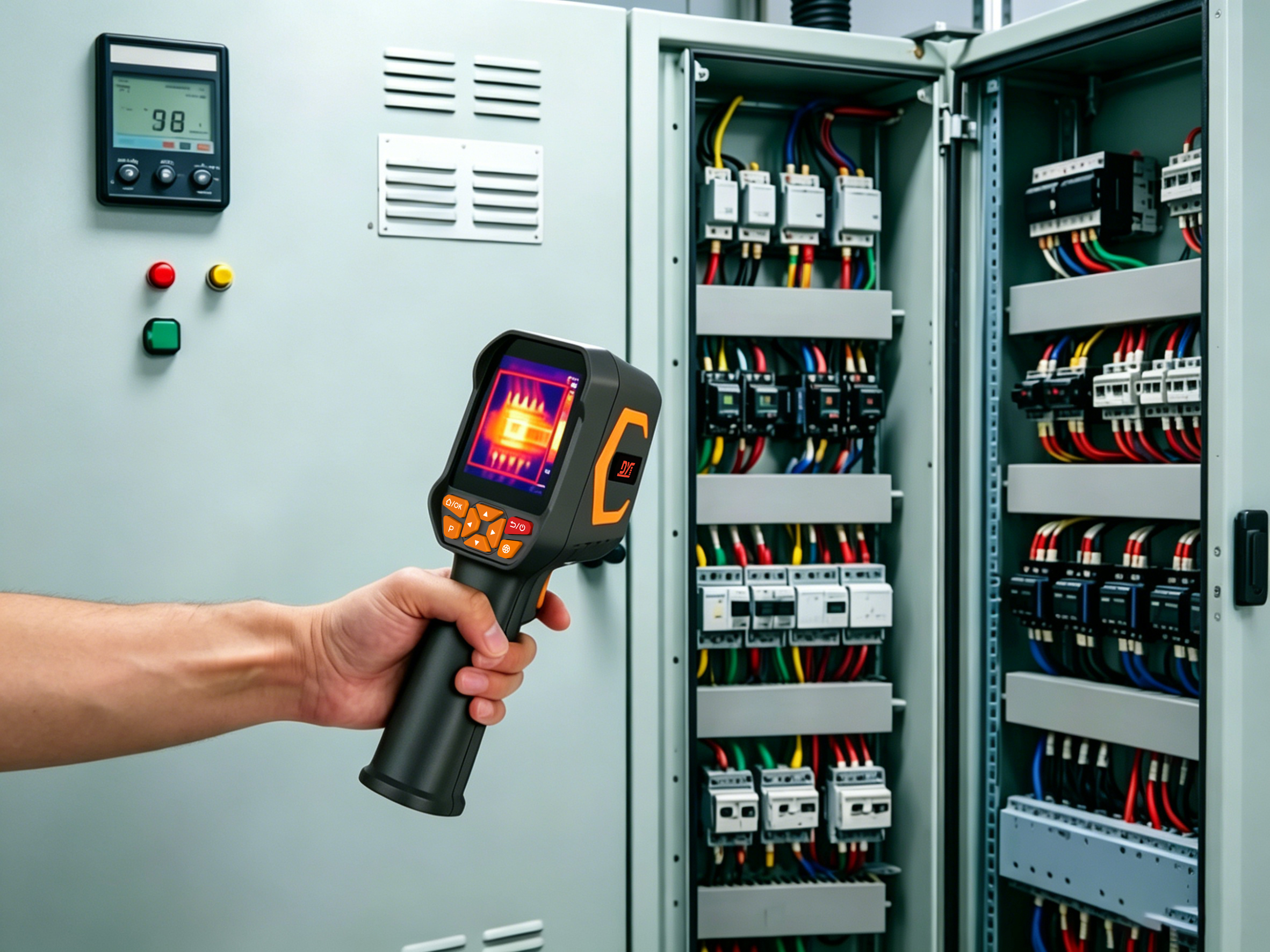
By sing the DP-25DV to screen for overheating issues at the wiring terminals of the distribution cabinets, the customer completed a special inspection of over 20 distribution cabinets within a short period of time.
- Hazard Identification: A total of 11 hidden overheating hazards at the wiring terminals were identified, and all were completed with closed-loop rectification.
- Safety Benefits: All operations were conducted while the equipment was energized, resulting in zero downtime and zero safety accidents, effectively avoiding risks of electrical fires and sudden power outages.
- Efficiency Enhancement: The inspection efficiency increased by 80%, the coverage rate of hazard identification reached 100%, significantly improving the operational stability and safety of the distribution system in the factory area, providing a solid foundation for the continuous safe production of the enterprise.
Scene Expansion and Customization Service Description
The above standardized application cases merely illustrate the implementation effect of this infrared thermal imaging device in the core scenarios of the power and electrical industry. In fact, this infrared thermal imaging detection solution possesses extremely strong scene universality and functional customizability, and can be widely adapted to the following scenarios across all industries:
- Energy and Power: Photovoltaic module inspection, new energy storage, substation operation and maintenance.
- Industrial Manufacturing: Electronic manufacturing, industrial machinery, thermal defect screening of automotive components, monitoring of metallurgical high-temperature equipment.
- Construction and Research: Building energy efficiency inspection, leak detection of ventilation and heating pipelines, thermal analysis for laboratory research.
According to the varying working conditions, detection standards, product materials, temperature ranges and screening accuracy requirements of different industries, we can provide customized solutions specifically tailored to each case. The service includes equipment parameter customization, dedicated temperature threshold calibration, software function customization and specialized technical training, fully meeting the diverse needs in various scenarios.