

Home Inspection: Before Signing the Contract, See What the Walls Are Hiding
Problem: The Paint Looked Fine, but the Wall Was Already Rotting
James and his wife fell in love with a 2012 single-family home in Tampa, Florida. At 1,800 sq ft, facing south, and listed at $420,000, it seemed like a solid buy. Before putting down the deposit, they hired a licensed home inspector for a standard two-hour inspection: visual checks of walls and floors, tap testing for hollow tiles, plumbing and electrical checks, and drain tests. The report came back clean—"No major defects found. Transaction recommended."
Three months after moving in, a yellowish water stain appeared on the master bedroom wall near the bathroom. Then the wallpaper bulged, turned black, and began to smell of mold. Tearing it open revealed a cracked pipe that had been leaking for some time and a section of waterlogged insulation. The repair estimate: about $5,200 to remove the wall, replace the pipe section, redo waterproofing, and restore the finish. And that was only the beginning—six months later, water began seeping under the balcony sliding door, the living room's east-facing wall felt cold in winter, and heating bills ran more than 30% higher than the neighbor's same-model home.
The issue: the inspector had used eyes, hands, ears, and a contact thermometer, but the paint was intact, the pipe was inside the wall, and the insulation was invisible. Moisture evaporation cooled localized wall areas; missing insulation made exterior-facing walls noticeably cold in winter; overloaded junction boxes warmed up quietly when energized. The thermal signals were always there—there just wasn't a way to see them. And in most Florida resale transactions, homes are sold "as-is": problems the inspection report misses are rarely recoverable from the seller after closing.
"Our inspection report said 'No major defects.' But the thermal camera showed me the wall problem was already there on the day they signed the contract."
— Founder of a licensed home inspection firm in Tampa
The Shift: Making the Walls Talk
James's story is not unusual in the humid southeastern United States. According to the American Society of Home Inspectors (ASHI), roughly 60% of resale homes reveal hidden issues after closing, and moisture intrusion and insulation gaps are among the hardest categories to catch with visual inspection alone. A four-year-old Tampa inspection firm decided to add a handheld thermal camera to its standard workflow, choosing the Dianyang DP Series at 384×288 resolution.
Why 384×288 instead of 640×512? Every inspection task happens between 0.5 and 3 meters: wall moisture, window sealing, bathroom waterproofing, underfloor heating pipes, electrical panel connections. At 1 meter, the 384×288 sensor delivers roughly 2 mm per pixel—enough to resolve the outline of a damp patch on a wall, the thermal trace of a heating pipe, or a hot terminal. Its wider field of view covers whole walls faster than 640×512. Inspectors don't need "smaller pixels"; they need faster coverage and an understandable temperature map. The 384×288 hits the resolution requirement while keeping cost and selling price within reach of small-to-medium inspection firms and individual homeowners.
Beyond that, thermal imaging catches three categories of defects that traditional methods almost never do:
- Moisture localization— evaporating water cools damp wall sections 2–4°C below surrounding areas, revealing leaks even when the surface looks perfectly dry.
- Insulation gaps— cold interior faces of exterior walls in winter expose empty cavities and thermal bridges directly.
- Electrical hazards— overloaded terminals warm up under load; invisible to the eye but obvious on a thermal image.
The Plan: 20 Minutes of Thermal Imaging in a Two-Hour Inspection
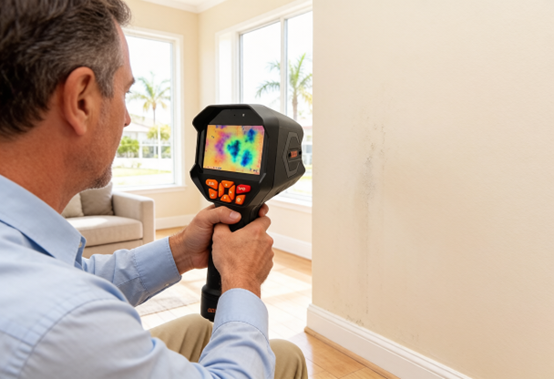
The firm embedded thermal imaging into its standard process as a "second pair of eyes" for visual inspection:
Step 1 — Baseline Mapping
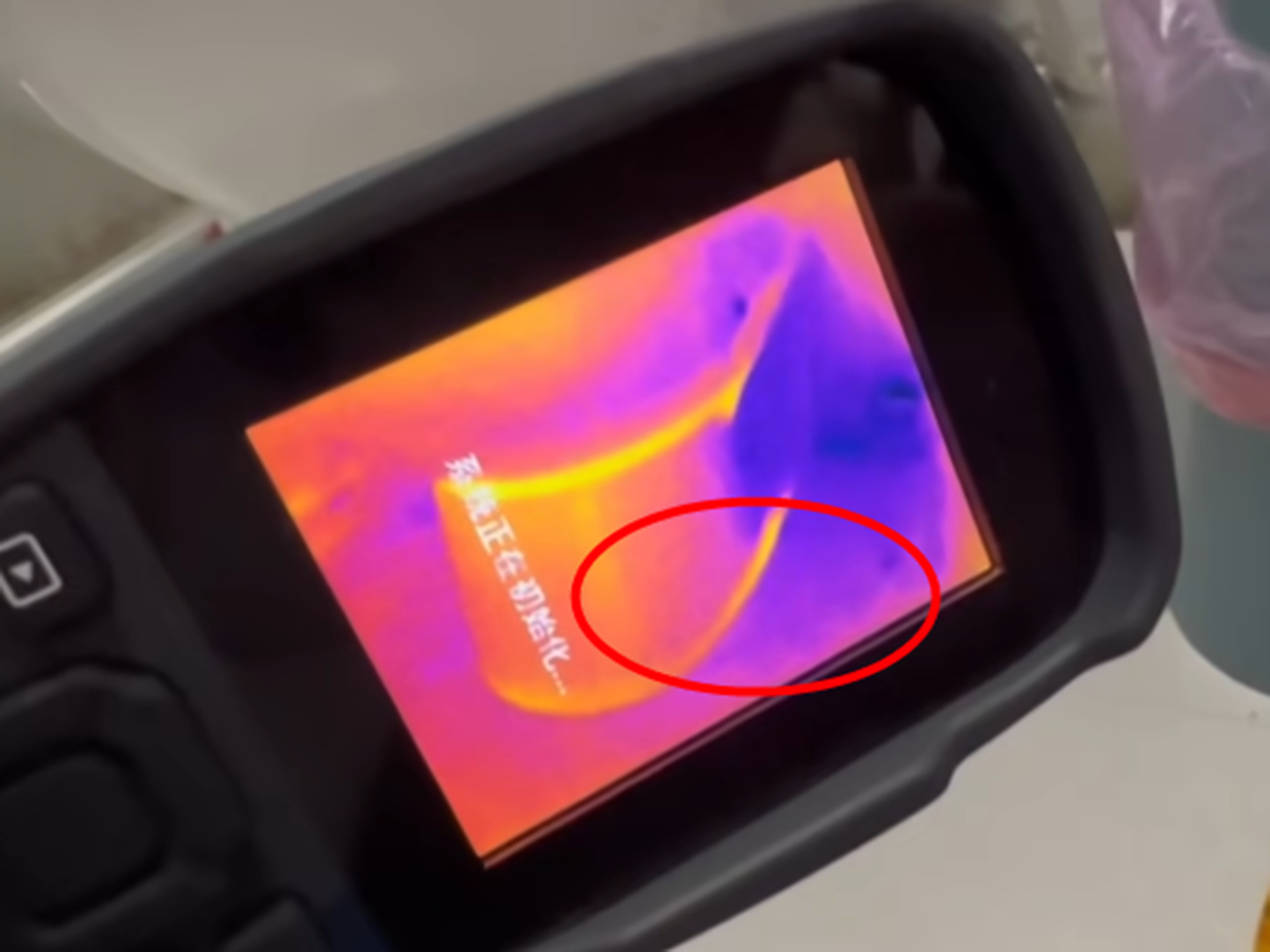
On arrival, record the temperature distribution on each interior face of exterior walls to establish a baseline. Moisture-damaged areas are identified not by absolute low temperature, but by being 2–4°C cooler than adjacent wall sections with irregular, patchy outlines. Because Tampa is hot and humid year-round, the baseline must be measured on the day of the inspection rather than taken from a fixed threshold.
Step 2 — Systematic Scan
Follow a fixed route across six priority zones: bathroom and kitchen waterproofing (within 30 cm of the floor), window sills and balcony seals, interior faces of exterior walls, underfloor heating / plumbing routes, electrical panels and outlets, and ceiling corners. One scan per wall; the whole house takes about 20 minutes. Experienced inspectors run the AC for 10 minutes before scanning to widen the indoor-outdoor temperature gap—the larger the delta, the sharper the outline of moisture and insulation defects.
Step 3 — Anomaly Verification
When a cold or hot spot is found, verify with a contact thermometer and a moisture meter to rule out false positives such as cold air seeping through a window gap. A moisture reading above 17%, combined with the thermal image, is generally enough to pinpoint the leak.
Step 4 — Visual Report
Thermal images are placed side-by-side with visible-light photos, annotated with location, temperature difference, and repair priority, then delivered with the inspection report. Buyers use the report both to negotiate repair credits and to plan their future maintenance budget.
Results: Invisible Problems Were Written into the Negotiation for the First Time
In the six months since introducing thermal imaging, the firm performed 312 inspections and found 47 issues that visual inspection alone could not confirm: 23 moisture risks, 15 insulation deficiencies, and 9 overheating electrical circuits. In one case, the buyer used the thermal report to negotiate a $4,000 repair credit from the seller.
For the inspection firm, thermal imaging became a clear differentiator: a base inspection runs about 300, with a thermal imaging add-on of 150. More than 60% of clients opt in. As the founder put it: "Customers pay an extra $150 for the certainty of seeing inside the walls before they sign. That math is easy for anyone."
More importantly, the thermal report is changing how both sides negotiate: sellers now commission thermal pre-inspections before listing and document repairs in their disclosures to build buyer confidence, while buyers use the images as evidence for price adjustments and claims. An instrument weighing under 400 g is turning "invisible home risk" into something that is visible, measurable, and negotiable.